
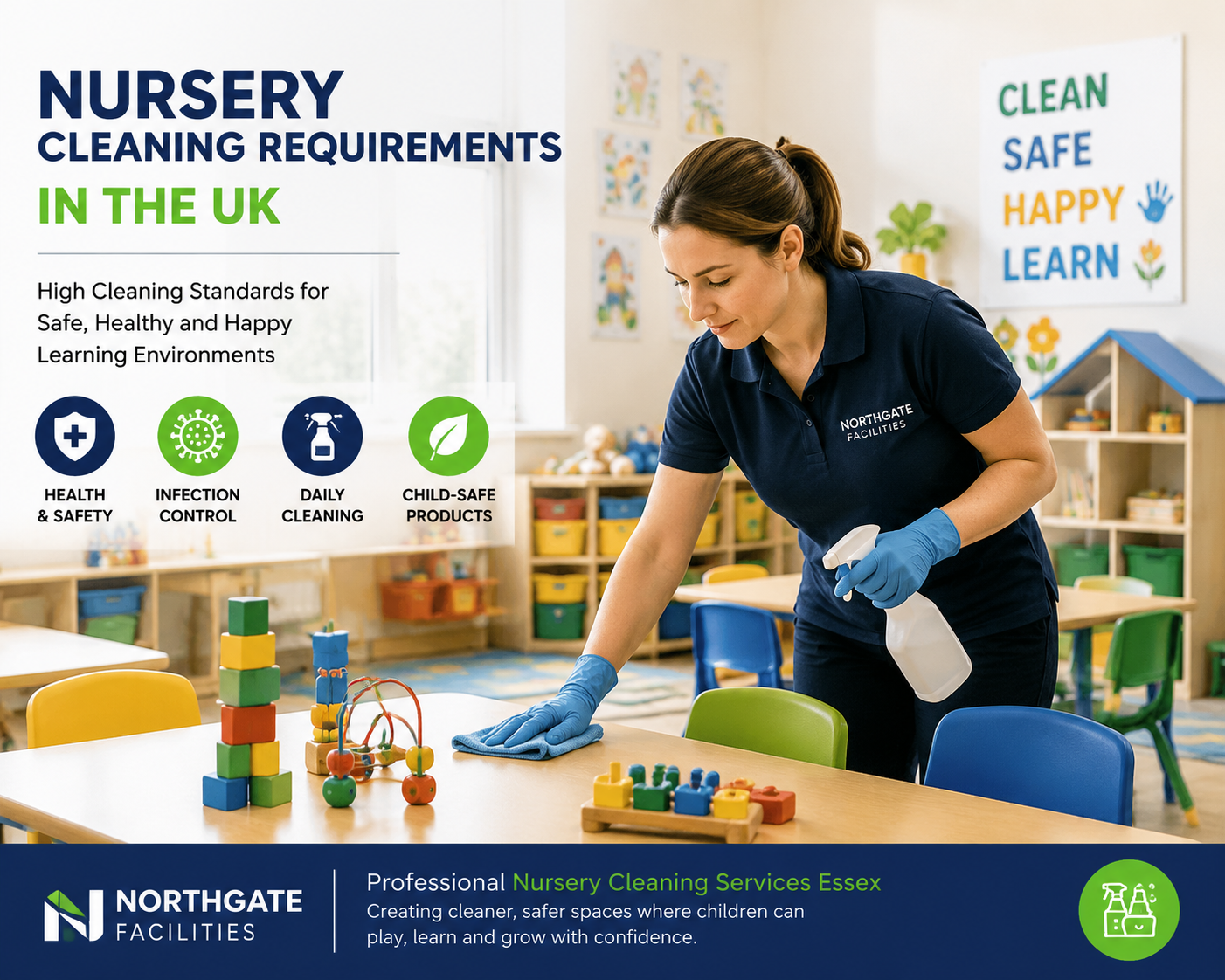
Keeping a nursery clean is about far more than appearance. It is a vital part of protecting young children's health, supporting their development and creating an environment where parents feel confident leaving their children each day. Nurseries are among the busiest environments in the UK, with children constantly playing, learning, eating and interacting with shared toys, furniture and equipment. This level of activity makes effective cleaning essential for preventing the spread of germs, reducing illness and ensuring compliance with health and safety regulations.
Children under five have developing immune systems, making them more vulnerable to bacteria, viruses and allergens than older children or adults. Even minor lapses in hygiene can quickly lead to outbreaks of common illnesses that affect children, staff and families. This is why many childcare providers now rely on professional nursery cleaning services Essex to maintain consistently high hygiene standards while allowing educators to focus on delivering quality childcare.
Northgate Facilities understands the unique cleaning requirements of childcare settings across the UK. By combining industry expertise with professional cleaning practices, nurseries can provide safer, healthier and more welcoming spaces for every child.
Why Nursery Cleaning Standards Are So Important
Nurseries welcome dozens of children every day, each bringing different levels of exposure to bacteria and viruses from home, outdoor play and public environments. Unlike offices or commercial premises, young children frequently touch surfaces, share toys and place objects in their mouths, increasing the likelihood of germs spreading throughout the setting.
Daily cleaning is therefore not simply routine maintenance but an essential infection prevention measure. Clean classrooms, play areas and communal spaces help reduce absenteeism caused by illnesses while supporting children's wellbeing and comfort.
Parents also pay close attention to cleanliness when selecting childcare providers. Sparkling facilities, fresh-smelling rooms and visibly clean equipment reassure families that their children are being cared for in a safe environment. Professional cleaning therefore contributes not only to health but also to a nursery's reputation and trustworthiness.
Understanding UK Nursery Hygiene Requirements
Nurseries across England, Scotland, Wales and Northern Ireland are expected to maintain high standards of cleanliness under various health, safety and childcare regulations. While specific guidance may vary, providers are generally responsible for ensuring premises remain clean, hygienic and suitable for children's care.
Cleaning procedures should form part of a wider health and safety management system that includes infection prevention, risk assessments and regular inspections. Maintaining detailed cleaning schedules helps demonstrate that hygiene standards are consistently monitored and achieved.
Professional cleaning contractors understand these expectations and ensure that all cleaning practices align with current UK guidance, helping childcare providers remain compliant while protecting children and staff.
High-Touch Surfaces Need Frequent Attention
Children naturally touch almost everything around them. Door handles, cupboard doors, tables, chairs, storage units, stair rails and play equipment quickly become gathering points for bacteria throughout the day.
These high-contact surfaces require cleaning and disinfection several times daily, especially during periods of increased illness such as winter or flu season. Simply wiping visible dirt away is not enough. Appropriate disinfectants must be used correctly to eliminate harmful microorganisms without leaving harmful residues behind.
Professional nursery cleaning services Essex ensure that these frequently touched areas receive the attention they require using child-safe products and proven cleaning techniques.
Maintaining Safe and Hygienic Play Areas
Play is central to every nursery environment. Whether children are building with blocks, painting, reading books or enjoying imaginative play, every activity involves shared equipment.
Soft toys, wooden toys, plastic learning aids and educational equipment all require regular cleaning. Toys that young children place in their mouths should be cleaned and disinfected even more frequently to minimise infection risks.
Floor mats, play carpets and activity areas also require specialist care because they collect dust, allergens and bacteria throughout the day. Regular vacuuming using HEPA-filter equipment, combined with scheduled deep cleaning, helps maintain healthier indoor air quality while extending the lifespan of flooring materials.
Maintaining clean play environments supports children's health while allowing them to explore and learn safely.
Washroom Hygiene Plays a Critical Role
Nursery washrooms experience continuous use and demand exceptionally high cleaning standards. Toilets, sinks, taps, changing stations and nappy disposal areas require careful cleaning throughout the day to prevent contamination.
Changing facilities deserve particular attention because they involve direct contact with bodily fluids. Appropriate disinfectants, disposable cleaning materials and strict cleaning procedures help reduce cross-contamination between children.
Soap dispensers, hand-drying facilities and sanitising products should remain fully stocked at all times to encourage good hand hygiene among both children and staff. Good cleaning practices combined with effective handwashing significantly reduce the spread of common childhood illnesses.
Kitchen and Food Preparation Areas
Many nurseries prepare snacks and meals on-site, making food hygiene another essential aspect of daily cleaning. Kitchen surfaces, preparation counters, dining tables and food storage areas must all be cleaned thoroughly to reduce contamination risks.
Cross-contamination between raw and prepared foods must be avoided through effective cleaning practices. Food waste should be removed promptly, while bins require regular sanitisation to prevent unpleasant odours and pest activity.
Dining areas also need attention after every meal. Tables, chairs and surrounding floors should be cleaned immediately to remove food residues that attract bacteria or insects.
Professional cleaning teams understand the additional hygiene expectations surrounding food preparation environments and help nurseries maintain consistently high standards.
Managing Infection Control Throughout the Year
Infection control remains one of the biggest challenges facing childcare providers. Seasonal illnesses such as colds, influenza, norovirus and other viral infections can spread rapidly among young children if cleaning standards decline.
During periods of increased illness, cleaning frequencies should be increased across all shared spaces. Frequently touched surfaces, communal toys and washrooms benefit from additional disinfection throughout the day.
Good ventilation also contributes to healthier indoor environments by reducing airborne contaminants and improving air quality. Combining effective ventilation with regular cleaning creates a more comprehensive infection prevention strategy.
Professional cleaning companies work alongside nursery managers to adapt cleaning schedules whenever infection risks increase, helping maintain healthier environments for everyone.
Choosing Child-Safe Cleaning Products
Cleaning products used in nurseries must be effective against harmful bacteria while remaining safe for young children. Harsh chemicals with strong fumes or potentially hazardous residues are unsuitable for environments where children crawl, play and learn.
Many modern cleaning providers now use environmentally responsible products that meet strict safety standards while delivering excellent hygiene performance. These products reduce chemical exposure without compromising cleanliness.
Using colour-coded cleaning equipment also helps prevent cross-contamination between different areas such as toilets, kitchens and classrooms. This simple but highly effective practice supports better infection control throughout the nursery.
Professional nursery cleaning services Essex carefully select products that balance safety, effectiveness and environmental responsibility, ensuring children can enjoy clean surroundings without unnecessary chemical exposure.
Deep Cleaning Supports Long-Term Hygiene
Daily cleaning forms the foundation of nursery hygiene, but it should always be supported by scheduled deep cleaning. Over time, dust, bacteria and hidden dirt accumulate in areas that routine cleaning may not fully address. Carpets, upholstery, ventilation systems, storage cupboards and high-level surfaces all benefit from more intensive cleaning at regular intervals.
Deep cleaning is particularly valuable during school holidays, before the start of a new term or after outbreaks of infectious illnesses. These quieter periods allow professional cleaners to carry out comprehensive work without disrupting children’s daily activities.
Steam cleaning carpets and soft furnishings can help remove allergens, bacteria and embedded dirt, while specialist floor treatments restore hygiene and improve the appearance of classrooms and communal spaces. Thorough cleaning of windows, skirting boards, radiators and light fittings also contributes to a brighter, healthier environment.
By incorporating planned deep cleans into their maintenance schedule, nurseries can reduce long-term wear and tear while maintaining consistently high hygiene standards throughout the year.
Creating a Safe Environment for Children and Staff
A clean nursery benefits everyone who uses the building. Children are less likely to come into contact with harmful germs, while staff can work in an environment that supports their wellbeing and productivity.
Slips, trips and falls can also be reduced through effective cleaning. Wet floors should be cleaned and dried correctly, spillages dealt with immediately and walkways kept free from clutter. These simple measures contribute to a safer workplace and help meet employers’ health and safety responsibilities.
Indoor air quality is another important consideration. Dust, pollen and allergens can affect children with asthma or allergies, making regular vacuuming, dust removal and ventilation essential. Professional cleaning helps create fresher indoor spaces where children can learn and play comfortably.
When hygiene and safety work together, nurseries become more welcoming environments that promote confidence among staff, parents and regulatory inspectors alike.
Sustainability in Nursery Cleaning
Environmental responsibility is becoming increasingly important for childcare providers across the UK. Many parents value organisations that actively reduce their environmental impact, and sustainable cleaning practices can support this expectation.
Using eco-friendly cleaning products, reducing unnecessary chemical use and choosing reusable cleaning materials where appropriate all contribute to a greener nursery. Water-efficient cleaning methods and responsible waste management further minimise environmental impact without compromising hygiene.
Professional cleaning companies are also investing in modern equipment that uses less energy while delivering excellent cleaning performance. Microfibre cloths, HEPA-filter vacuum cleaners and low-impact cleaning solutions help achieve outstanding results while supporting sustainability goals.
For nurseries, adopting environmentally responsible cleaning practices demonstrates a commitment not only to children’s health today but also to the future environment they will inherit.
The Value of Professional Nursery Cleaning Services
Although nursery staff carry out regular tidying and basic hygiene tasks throughout the day, maintaining professional cleaning standards requires specialist knowledge, equipment and experience.
Professional cleaners understand which areas require greater attention, how different surfaces should be cleaned and which products are appropriate for childcare environments. They work to structured cleaning schedules, ensuring consistency across every room and reducing the risk of important tasks being overlooked.
Outsourcing cleaning also allows nursery staff to focus on what they do best—supporting children's education, development and wellbeing. Rather than dividing their attention between childcare and extensive cleaning responsibilities, educators can concentrate on delivering high-quality learning experiences.
Many childcare providers choose nursery cleaning services Essex because they provide dependable, flexible solutions tailored to the specific needs of each nursery. Whether cleaning is required daily, after hours or during holiday periods, professional services help maintain exceptional standards throughout the year.
How Northgate Facilities Supports UK Nurseries
Every nursery has unique requirements depending on its size, number of children and daily activities. Northgate Facilities works closely with childcare providers to develop customised cleaning programmes that reflect these individual needs.
Experienced cleaning teams understand the importance of discretion, reliability and consistency in educational settings. They use appropriate child-safe products, follow strict cleaning procedures and pay close attention to high-risk areas where germs spread most easily.
Flexible scheduling ensures cleaning takes place with minimal disruption to nursery operations, whether before opening, after closing or during quieter periods. Regular quality checks also help maintain consistently high standards, giving nursery managers confidence that every area has been cleaned thoroughly.
By partnering with a trusted cleaning provider, nurseries can demonstrate their commitment to health, safety and professional care while creating environments where children feel secure and parents feel reassured.
Conclusion
Maintaining excellent hygiene in a nursery is about far more than keeping the premises looking clean. It plays a crucial role in protecting children's health, supporting staff wellbeing, meeting UK regulatory expectations and creating an environment where learning and development can flourish.
From classrooms and play areas to kitchens, washrooms and outdoor spaces, every part of a nursery requires consistent attention. Daily cleaning, supported by scheduled deep cleaning, effective infection control measures and environmentally responsible practices, helps reduce illness while providing children with a safe and welcoming place to grow.
Professional nursery cleaning services Essex offer the expertise, equipment and reliability needed to maintain these high standards every day. Northgate Facilities delivers tailored cleaning solutions designed specifically for childcare environments, helping nurseries across the region provide cleaner, healthier and safer spaces for children, staff and families alike. If you are looking for dependable nursery cleaning services that prioritise quality, compliance and peace of mind, contact Northgate Facilities to discuss your requirements.
Keeping a nursery clean is about far more than appearance. It is a vital part of protecting young children's health, supporting their development and creating an environment where parents feel confident leaving their children each day. Nurseries are among the busiest environments in the UK, with children constantly playing, learning, eating and interacting with shared toys, furniture and equipment. This level of activity makes effective cleaning essential for preventing the spread of germs, reducing illness and ensuring compliance with health and safety regulations.
Children under five have developing immune systems, making them more vulnerable to bacteria, viruses and allergens than older children or adults. Even minor lapses in hygiene can quickly lead to outbreaks of common illnesses that affect children, staff and families. This is why many childcare providers now rely on professional nursery cleaning services Essex to maintain consistently high hygiene standards while allowing educators to focus on delivering quality childcare.
Northgate Facilities understands the unique cleaning requirements of childcare settings across the UK. By combining industry expertise with professional cleaning practices, nurseries can provide safer, healthier and more welcoming spaces for every child.
Why Nursery Cleaning Standards Are So Important
Nurseries welcome dozens of children every day, each bringing different levels of exposure to bacteria and viruses from home, outdoor play and public environments. Unlike offices or commercial premises, young children frequently touch surfaces, share toys and place objects in their mouths, increasing the likelihood of germs spreading throughout the setting.
Daily cleaning is therefore not simply routine maintenance but an essential infection prevention measure. Clean classrooms, play areas and communal spaces help reduce absenteeism caused by illnesses while supporting children's wellbeing and comfort.
Parents also pay close attention to cleanliness when selecting childcare providers. Sparkling facilities, fresh-smelling rooms and visibly clean equipment reassure families that their children are being cared for in a safe environment. Professional cleaning therefore contributes not only to health but also to a nursery's reputation and trustworthiness.
Understanding UK Nursery Hygiene Requirements
Nurseries across England, Scotland, Wales and Northern Ireland are expected to maintain high standards of cleanliness under various health, safety and childcare regulations. While specific guidance may vary, providers are generally responsible for ensuring premises remain clean, hygienic and suitable for children's care.
Cleaning procedures should form part of a wider health and safety management system that includes infection prevention, risk assessments and regular inspections. Maintaining detailed cleaning schedules helps demonstrate that hygiene standards are consistently monitored and achieved.
Professional cleaning contractors understand these expectations and ensure that all cleaning practices align with current UK guidance, helping childcare providers remain compliant while protecting children and staff.
High-Touch Surfaces Need Frequent Attention
Children naturally touch almost everything around them. Door handles, cupboard doors, tables, chairs, storage units, stair rails and play equipment quickly become gathering points for bacteria throughout the day.
These high-contact surfaces require cleaning and disinfection several times daily, especially during periods of increased illness such as winter or flu season. Simply wiping visible dirt away is not enough. Appropriate disinfectants must be used correctly to eliminate harmful microorganisms without leaving harmful residues behind.
Professional nursery cleaning services Essex ensure that these frequently touched areas receive the attention they require using child-safe products and proven cleaning techniques.
Maintaining Safe and Hygienic Play Areas
Play is central to every nursery environment. Whether children are building with blocks, painting, reading books or enjoying imaginative play, every activity involves shared equipment.
Soft toys, wooden toys, plastic learning aids and educational equipment all require regular cleaning. Toys that young children place in their mouths should be cleaned and disinfected even more frequently to minimise infection risks.
Floor mats, play carpets and activity areas also require specialist care because they collect dust, allergens and bacteria throughout the day. Regular vacuuming using HEPA-filter equipment, combined with scheduled deep cleaning, helps maintain healthier indoor air quality while extending the lifespan of flooring materials.
Maintaining clean play environments supports children's health while allowing them to explore and learn safely.
Washroom Hygiene Plays a Critical Role
Nursery washrooms experience continuous use and demand exceptionally high cleaning standards. Toilets, sinks, taps, changing stations and nappy disposal areas require careful cleaning throughout the day to prevent contamination.
Changing facilities deserve particular attention because they involve direct contact with bodily fluids. Appropriate disinfectants, disposable cleaning materials and strict cleaning procedures help reduce cross-contamination between children.
Soap dispensers, hand-drying facilities and sanitising products should remain fully stocked at all times to encourage good hand hygiene among both children and staff. Good cleaning practices combined with effective handwashing significantly reduce the spread of common childhood illnesses.
Kitchen and Food Preparation Areas
Many nurseries prepare snacks and meals on-site, making food hygiene another essential aspect of daily cleaning. Kitchen surfaces, preparation counters, dining tables and food storage areas must all be cleaned thoroughly to reduce contamination risks.
Cross-contamination between raw and prepared foods must be avoided through effective cleaning practices. Food waste should be removed promptly, while bins require regular sanitisation to prevent unpleasant odours and pest activity.
Dining areas also need attention after every meal. Tables, chairs and surrounding floors should be cleaned immediately to remove food residues that attract bacteria or insects.
Professional cleaning teams understand the additional hygiene expectations surrounding food preparation environments and help nurseries maintain consistently high standards.
Managing Infection Control Throughout the Year
Infection control remains one of the biggest challenges facing childcare providers. Seasonal illnesses such as colds, influenza, norovirus and other viral infections can spread rapidly among young children if cleaning standards decline.
During periods of increased illness, cleaning frequencies should be increased across all shared spaces. Frequently touched surfaces, communal toys and washrooms benefit from additional disinfection throughout the day.
Good ventilation also contributes to healthier indoor environments by reducing airborne contaminants and improving air quality. Combining effective ventilation with regular cleaning creates a more comprehensive infection prevention strategy.
Professional cleaning companies work alongside nursery managers to adapt cleaning schedules whenever infection risks increase, helping maintain healthier environments for everyone.
Choosing Child-Safe Cleaning Products
Cleaning products used in nurseries must be effective against harmful bacteria while remaining safe for young children. Harsh chemicals with strong fumes or potentially hazardous residues are unsuitable for environments where children crawl, play and learn.
Many modern cleaning providers now use environmentally responsible products that meet strict safety standards while delivering excellent hygiene performance. These products reduce chemical exposure without compromising cleanliness.
Using colour-coded cleaning equipment also helps prevent cross-contamination between different areas such as toilets, kitchens and classrooms. This simple but highly effective practice supports better infection control throughout the nursery.
Professional nursery cleaning services Essex carefully select products that balance safety, effectiveness and environmental responsibility, ensuring children can enjoy clean surroundings without unnecessary chemical exposure.
Deep Cleaning Supports Long-Term Hygiene
Daily cleaning forms the foundation of nursery hygiene, but it should always be supported by scheduled deep cleaning. Over time, dust, bacteria and hidden dirt accumulate in areas that routine cleaning may not fully address. Carpets, upholstery, ventilation systems, storage cupboards and high-level surfaces all benefit from more intensive cleaning at regular intervals.
Deep cleaning is particularly valuable during school holidays, before the start of a new term or after outbreaks of infectious illnesses. These quieter periods allow professional cleaners to carry out comprehensive work without disrupting children’s daily activities.
Steam cleaning carpets and soft furnishings can help remove allergens, bacteria and embedded dirt, while specialist floor treatments restore hygiene and improve the appearance of classrooms and communal spaces. Thorough cleaning of windows, skirting boards, radiators and light fittings also contributes to a brighter, healthier environment.
By incorporating planned deep cleans into their maintenance schedule, nurseries can reduce long-term wear and tear while maintaining consistently high hygiene standards throughout the year.
Creating a Safe Environment for Children and Staff
A clean nursery benefits everyone who uses the building. Children are less likely to come into contact with harmful germs, while staff can work in an environment that supports their wellbeing and productivity.
Slips, trips and falls can also be reduced through effective cleaning. Wet floors should be cleaned and dried correctly, spillages dealt with immediately and walkways kept free from clutter. These simple measures contribute to a safer workplace and help meet employers’ health and safety responsibilities.
Indoor air quality is another important consideration. Dust, pollen and allergens can affect children with asthma or allergies, making regular vacuuming, dust removal and ventilation essential. Professional cleaning helps create fresher indoor spaces where children can learn and play comfortably.
When hygiene and safety work together, nurseries become more welcoming environments that promote confidence among staff, parents and regulatory inspectors alike.
Sustainability in Nursery Cleaning
Environmental responsibility is becoming increasingly important for childcare providers across the UK. Many parents value organisations that actively reduce their environmental impact, and sustainable cleaning practices can support this expectation.
Using eco-friendly cleaning products, reducing unnecessary chemical use and choosing reusable cleaning materials where appropriate all contribute to a greener nursery. Water-efficient cleaning methods and responsible waste management further minimise environmental impact without compromising hygiene.
Professional cleaning companies are also investing in modern equipment that uses less energy while delivering excellent cleaning performance. Microfibre cloths, HEPA-filter vacuum cleaners and low-impact cleaning solutions help achieve outstanding results while supporting sustainability goals.
For nurseries, adopting environmentally responsible cleaning practices demonstrates a commitment not only to children’s health today but also to the future environment they will inherit.
The Value of Professional Nursery Cleaning Services
Although nursery staff carry out regular tidying and basic hygiene tasks throughout the day, maintaining professional cleaning standards requires specialist knowledge, equipment and experience.
Professional cleaners understand which areas require greater attention, how different surfaces should be cleaned and which products are appropriate for childcare environments. They work to structured cleaning schedules, ensuring consistency across every room and reducing the risk of important tasks being overlooked.
Outsourcing cleaning also allows nursery staff to focus on what they do best—supporting children's education, development and wellbeing. Rather than dividing their attention between childcare and extensive cleaning responsibilities, educators can concentrate on delivering high-quality learning experiences.
Many childcare providers choose nursery cleaning services Essex because they provide dependable, flexible solutions tailored to the specific needs of each nursery. Whether cleaning is required daily, after hours or during holiday periods, professional services help maintain exceptional standards throughout the year.
How Northgate Facilities Supports UK Nurseries
Every nursery has unique requirements depending on its size, number of children and daily activities. Northgate Facilities works closely with childcare providers to develop customised cleaning programmes that reflect these individual needs.
Experienced cleaning teams understand the importance of discretion, reliability and consistency in educational settings. They use appropriate child-safe products, follow strict cleaning procedures and pay close attention to high-risk areas where germs spread most easily.
Flexible scheduling ensures cleaning takes place with minimal disruption to nursery operations, whether before opening, after closing or during quieter periods. Regular quality checks also help maintain consistently high standards, giving nursery managers confidence that every area has been cleaned thoroughly.
By partnering with a trusted cleaning provider, nurseries can demonstrate their commitment to health, safety and professional care while creating environments where children feel secure and parents feel reassured.
Conclusion
Maintaining excellent hygiene in a nursery is about far more than keeping the premises looking clean. It plays a crucial role in protecting children's health, supporting staff wellbeing, meeting UK regulatory expectations and creating an environment where learning and development can flourish.
From classrooms and play areas to kitchens, washrooms and outdoor spaces, every part of a nursery requires consistent attention. Daily cleaning, supported by scheduled deep cleaning, effective infection control measures and environmentally responsible practices, helps reduce illness while providing children with a safe and welcoming place to grow.
Professional nursery cleaning services Essex offer the expertise, equipment and reliability needed to maintain these high standards every day. Northgate Facilities delivers tailored cleaning solutions designed specifically for childcare environments, helping nurseries across the region provide cleaner, healthier and safer spaces for children, staff and families alike. If you are looking for dependable nursery cleaning services that prioritise quality, compliance and peace of mind, contact Northgate Facilities to discuss your requirements.