
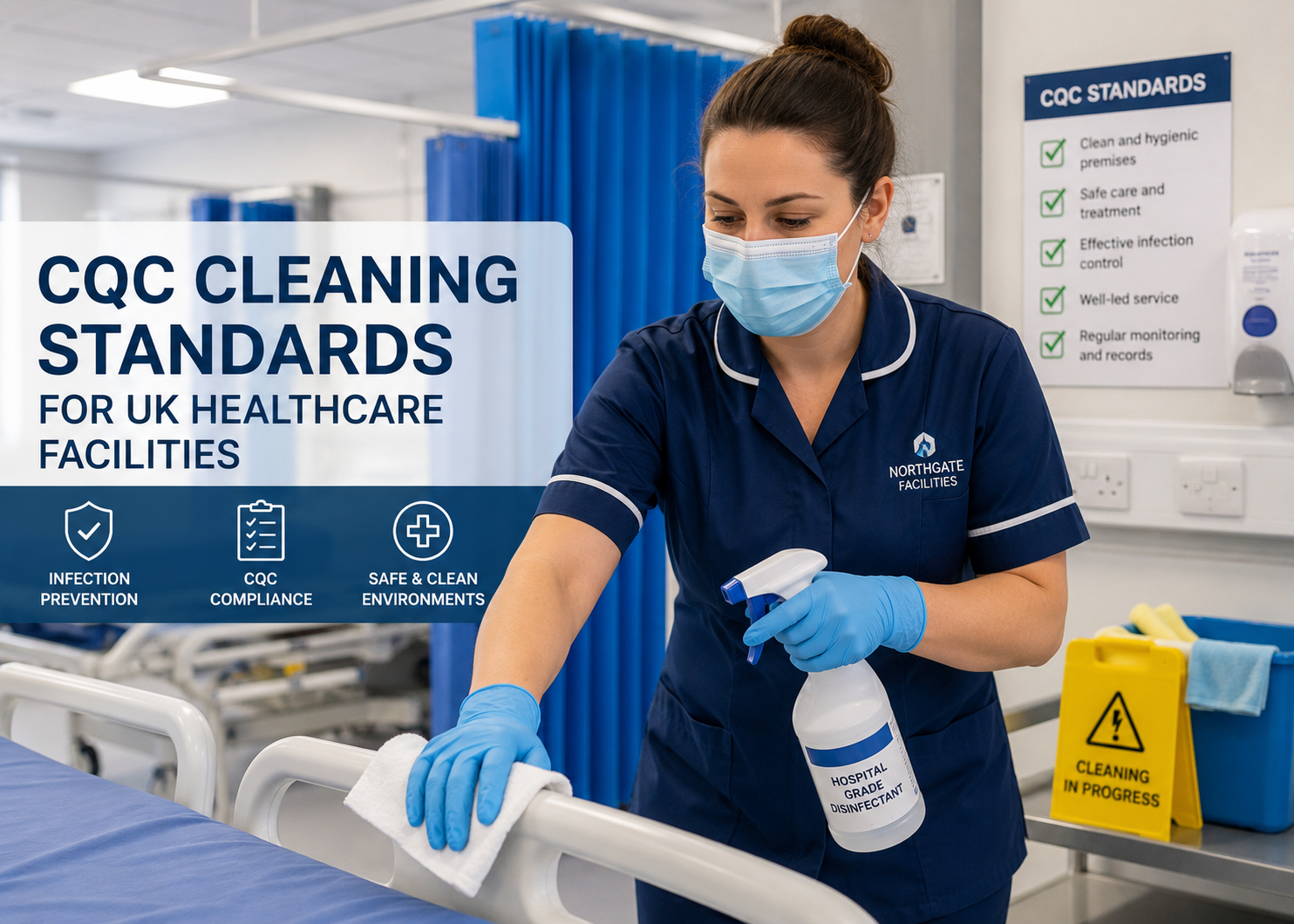
Healthcare environments demand far more than routine cleaning. Every hospital, GP surgery, dental practice, care home, and medical clinic must maintain exceptional hygiene standards to protect patients, staff, and visitors. In the UK, the Care Quality Commission (CQC) plays a vital role in ensuring healthcare providers deliver safe, clean, and compliant environments. Meeting these standards is not simply about appearance—it is about reducing infection risks, improving patient safety, and complying with legal regulations.
At Northgate Facilities, we understand the importance of maintaining healthcare environments that meet strict regulatory requirements. Our professional cleaning teams deliver specialist cleaning solutions designed to support healthcare organisations in achieving high standards of cleanliness and infection prevention.
In this guide, we'll explain what CQC cleaning standards involve, why they matter, and how professional cleaning services help healthcare facilities remain compliant.
What Are CQC Cleaning Standards?
The Care Quality Commission (CQC) regulates healthcare and social care providers across England. During inspections, the CQC assesses whether healthcare premises are clean, hygienic, safe, and suitable for delivering patient care.
Under Regulation 15 of the Health and Social Care Act 2008, healthcare providers must ensure that:
-
Premises remain clean and hygienic.
-
Equipment is properly maintained.
-
Appropriate cleaning schedules are followed.
-
Staff responsible for cleaning receive adequate training.
-
Cleaning performance is monitored regularly.
Although the CQC does not prescribe every cleaning method, healthcare providers are expected to follow recognised national guidance such as the National Standards of Healthcare Cleanliness 2025, which set out best practices for maintaining safe healthcare environments.
Why Healthcare Cleaning Is Different
Cleaning an office is very different from cleaning a healthcare facility.
Healthcare settings regularly deal with:
-
Harmful bacteria
-
Viruses
-
Bloodborne pathogens
-
Bodily fluids
-
Clinical waste
-
Vulnerable patients with weakened immune systems
Because of these risks, healthcare cleaning focuses on infection prevention rather than simply making a building look presentable.
Professional healthcare cleaners use:
-
Hospital-grade disinfectants
-
Colour-coded cleaning systems
-
Cross-contamination prevention methods
-
High-touch surface disinfection
-
Risk-based cleaning schedules
-
Strict documentation procedures
These specialised processes help minimise Healthcare Associated Infections (HAIs), which remain a major concern across healthcare environments.
National Standards of Healthcare Cleanliness
The NHS introduced the National Standards of Healthcare Cleanliness 2025 to provide a consistent framework for cleaning healthcare environments.
These standards cover:
-
Cleaning responsibilities
-
Cleaning frequencies
-
Risk categorisation
-
Audit procedures
-
Infection prevention
-
Performance monitoring
-
Governance
Every healthcare organisation is expected to develop cleaning policies that align with these standards while adapting them to local operational requirements.
Risk-Based Cleaning Approach
One of the key principles of healthcare cleaning is risk assessment.
Not every area requires the same level of cleaning.
High-Risk Areas
These include:
-
Operating theatres
-
Intensive Care Units
-
Isolation rooms
-
Treatment rooms
-
Emergency departments
These areas require:
-
Frequent cleaning
-
Enhanced disinfection
-
Detailed monitoring
-
Strict documentation
Medium-Risk Areas
Examples include:
-
Patient wards
-
Consultation rooms
-
Laboratories
-
Diagnostic rooms
Cleaning focuses on preventing cross-contamination while maintaining consistent hygiene.
Low-Risk Areas
These include:
-
Administrative offices
-
Reception areas
-
Staff meeting rooms
Although these spaces require less intensive cleaning, they still follow structured cleaning schedules to maintain a hygienic environment.
High-Touch Surface Cleaning
Many harmful microorganisms spread through surfaces that people touch frequently.
Examples include:
-
Door handles
-
Bed rails
-
Light switches
-
Lift buttons
-
Handrails
-
Chairs
-
Reception counters
-
Medical equipment
-
Touch screens
These surfaces require regular cleaning and disinfection throughout the day to reduce infection risks.
Professional cleaners follow documented cleaning frequencies to ensure these areas remain hygienic.
Infection Prevention and Control (IPC)
Infection Prevention and Control (IPC) sits at the heart of every healthcare cleaning programme.
Effective IPC includes:
-
Safe cleaning procedures
-
Appropriate disinfectant selection
-
Proper PPE usage
-
Hand hygiene
-
Waste management
-
Equipment decontamination
-
Staff training
Cleaning teams play a significant role in reducing the transmission of infectious diseases throughout healthcare facilities.
Without robust IPC measures, healthcare providers face increased infection risks, patient safety concerns, and potential compliance issues.
Cleaning Responsibilities
The National Standards clearly define cleaning responsibilities.
Cleaning duties may be shared between:
-
Dedicated cleaning staff
-
Clinical staff
-
Nursing teams
-
Estates teams
-
Housekeeping teams
Every item within a healthcare facility should have clearly assigned cleaning responsibility to prevent important equipment or surfaces from being overlooked.
Auditing and Monitoring
Cleaning should never rely on assumptions.
Healthcare organisations are expected to demonstrate that cleaning is being completed effectively through regular auditing.
Audits typically include:
-
Visual inspections
-
Surface cleanliness assessments
-
Documentation reviews
-
Cleaning frequency checks
-
Compliance monitoring
Audit results help identify areas requiring improvement while demonstrating compliance during CQC inspections.
Staff Training Matters
Professional healthcare cleaners require specialist training.
Training usually covers:
-
Infection control
-
COSHH awareness
-
Safe chemical handling
-
Colour-coded cleaning systems
-
PPE usage
-
Clinical waste handling
-
Cross-contamination prevention
Well-trained staff consistently deliver safer cleaning outcomes and help organisations meet regulatory expectations.
Clinical Waste Management
Healthcare facilities generate waste that cannot be handled like ordinary commercial waste.
Examples include:
-
Infectious waste
-
Sharps
-
Pharmaceutical waste
-
Hazardous materials
-
PPE disposal
Proper waste segregation reduces contamination risks while ensuring compliance with healthcare regulations.
Professional cleaning providers understand these procedures and work alongside healthcare staff to maintain safe environments.
Documentation Is Essential
CQC inspections often examine cleaning documentation alongside physical cleanliness.
Important records include:
-
Cleaning schedules
-
Daily cleaning logs
-
Deep cleaning records
-
Staff training records
-
Audit reports
-
Risk assessments
-
Equipment maintenance records
Accurate documentation provides evidence that cleaning standards are consistently maintained.
Common Reasons Healthcare Facilities Fail Cleaning Standards
Healthcare providers may struggle during inspections because of:
-
Incomplete cleaning schedules
-
Poor documentation
-
Inconsistent cleaning practices
-
Inadequate staff training
-
Cross-contamination risks
-
Missed high-touch surfaces
-
Poor infection control procedures
Working with experienced healthcare cleaning specialists significantly reduces these risks.
Benefits of Hiring Professional Healthcare Cleaning Specialists
Professional cleaning providers offer expertise that goes far beyond routine commercial cleaning.
Improved Infection Control
Specialist cleaning helps reduce harmful bacteria and viruses throughout healthcare environments.
Regulatory Compliance
Experienced providers understand current healthcare cleaning standards and regulatory expectations.
Better Patient Confidence
Patients feel more comfortable receiving treatment in visibly clean and hygienic facilities.
Enhanced Staff Safety
A cleaner workplace helps reduce illness among healthcare professionals.
Reduced Inspection Risks
Professional cleaning services help healthcare organisations prepare for CQC inspections through consistent cleaning programmes and detailed documentation.
Commercial Cleaning Services Ipswich:
Although healthcare cleaning requires specialist expertise, many organisations also require broader commercial cleaning support for offices, administrative buildings, healthcare headquarters, and associated business premises.
Commercial Cleaning Services Ipswich: provided by Northgate Facilities deliver reliable, high-quality cleaning solutions tailored to businesses of all sizes. Whether it's office cleaning, communal area maintenance, washroom hygiene, or specialist deep cleaning, our experienced team helps organisations maintain clean, professional, and welcoming workplaces while meeting high hygiene standards.
Why Choose Northgate Facilities?
At Northgate Facilities, we deliver tailored cleaning solutions for healthcare providers and commercial organisations across the UK.
Our services include:
-
Healthcare cleaning
-
Clinical cleaning
-
Deep cleaning
-
Infection control cleaning
-
Office cleaning
-
School cleaning
-
Commercial cleaning
-
Washroom services
-
Floor care
-
Specialist sanitisation
Our trained professionals follow industry best practices while using high-quality equipment and effective cleaning products to deliver exceptional hygiene standards. We understand the importance of reliability, consistency, and compliance in every environment we maintain.
Final Thoughts
Maintaining CQC-compliant healthcare environments requires far more than routine cleaning. It involves structured cleaning programmes, infection prevention strategies, trained personnel, detailed documentation, and continuous monitoring. By following the National Standards of Healthcare Cleanliness and investing in professional healthcare cleaning services, healthcare providers can create safer environments for patients, staff, and visitors while remaining prepared for CQC inspections.
Whether you manage a hospital, GP surgery, dental clinic, care home, or private medical practice, partnering with Northgate Facilities ensures your premises remain clean, compliant, and ready to deliver the highest standard of care.