
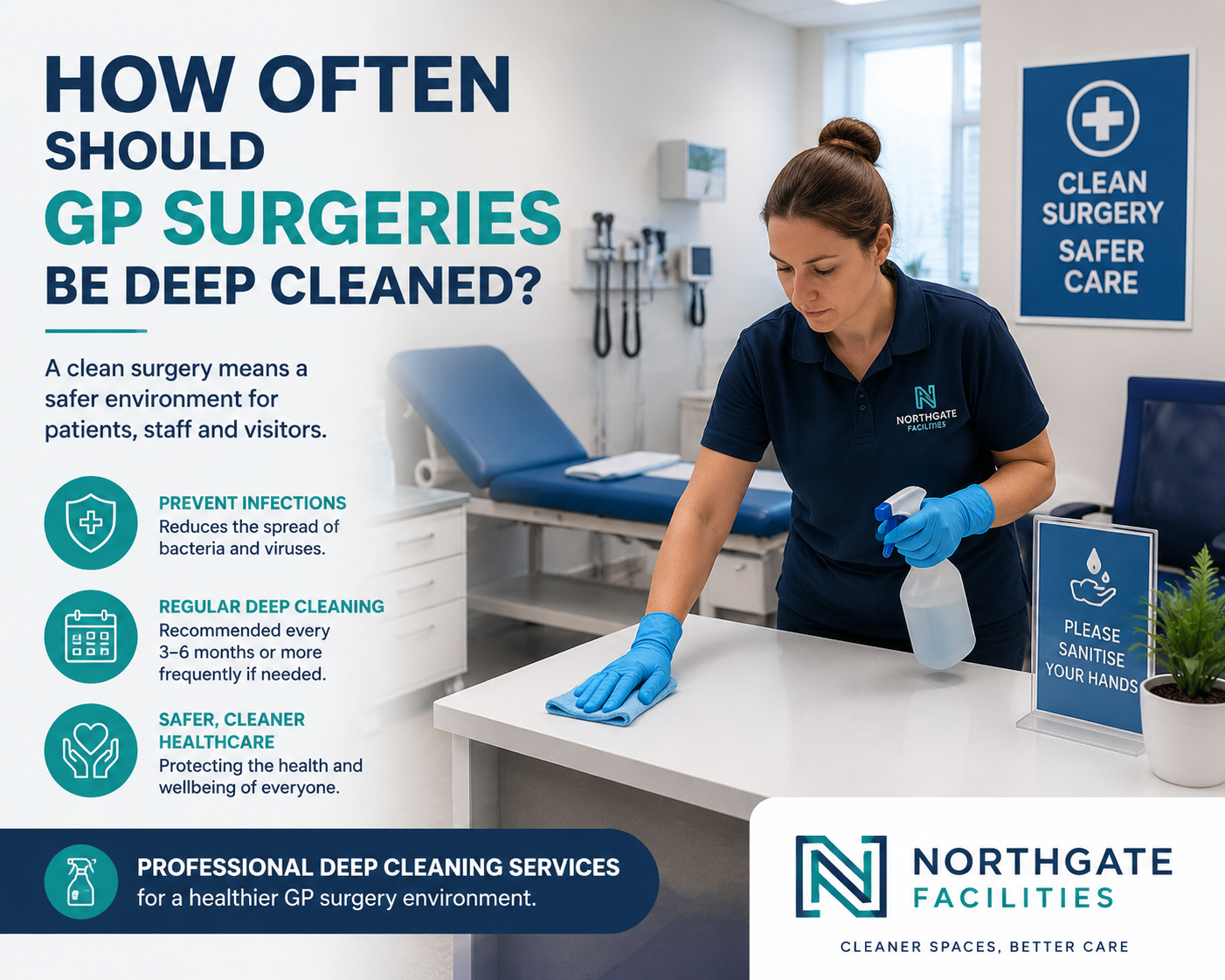
Maintaining exceptional cleanliness in GP surgeries is one of the most important responsibilities in modern healthcare. Every day, patients with different medical conditions visit these facilities, increasing the risk of germs, bacteria, and viruses spreading across frequently touched surfaces. While daily cleaning removes visible dirt and helps maintain a tidy environment, it is not enough to eliminate hidden contaminants that accumulate over time. This is why deep cleaning is an essential part of infection prevention and overall patient safety.
Healthcare facilities must meet strict hygiene standards to protect patients, staff, and visitors. A properly planned deep cleaning schedule not only supports compliance with UK healthcare regulations but also creates a healthier and more welcoming environment. Whether it involves disinfecting treatment rooms, sanitising waiting areas, or cleaning hard-to-reach spaces, deep cleaning plays a vital role in reducing healthcare-associated infections.
At Northgate Facilities, we understand the unique cleaning requirements of medical environments. Our professional cleaning teams provide tailored solutions that help GP surgeries maintain the highest standards of cleanliness while supporting safe and efficient healthcare operations.
Why Deep Cleaning Is Different from Routine Cleaning
Routine cleaning is designed to keep a GP surgery looking clean throughout the day. Reception desks are wiped, floors are mopped, bins are emptied, and washrooms are refreshed regularly. These tasks are necessary, but they mainly focus on visible cleanliness.
Deep cleaning goes much further. It targets areas that are often overlooked during daily cleaning routines. High-level surfaces, ventilation grilles, behind medical equipment, door frames, storage cupboards, light switches, and frequently touched points receive intensive cleaning and disinfection.
Professional deep cleaning also involves using healthcare-grade disinfectants that are capable of eliminating harmful microorganisms. This thorough process significantly reduces the microbial load within the building, helping lower the risk of cross-contamination.
For healthcare providers looking for reliable Deep Cleaning Services Clacton On Sea, choosing experienced professionals ensures every area of the surgery receives the attention it requires.
Why GP Surgeries Need Regular Deep Cleaning
Unlike standard office environments, GP surgeries experience constant patient turnover. Individuals with coughs, flu, stomach bugs, respiratory illnesses, infections, and chronic conditions all use the same facilities throughout the day.
Every interaction increases the possibility of contamination on commonly touched surfaces such as:
Door handles
Reception counters
Waiting room chairs
Medical examination beds
Blood pressure equipment
Computer keyboards
Light switches
Washroom fixtures
These surfaces may appear clean while still harbouring bacteria and viruses invisible to the naked eye. Without regular deep cleaning, microorganisms can continue spreading from one patient to another.
Professional cleaning helps break this chain of infection by thoroughly disinfecting surfaces using approved cleaning products and proven cleaning methods.
How Often Should GP Surgeries Be Deep Cleaned?
There is no universal schedule that applies to every GP surgery because every practice operates differently. The appropriate frequency depends on several important factors including patient numbers, treatment types, seasonal illnesses, and overall building usage.
For most GP surgeries, a professional deep clean every three to six months is considered good practice. However, surgeries with high patient volumes often require monthly or quarterly deep cleaning to maintain optimum hygiene.
Certain areas may need much more frequent attention.
Treatment rooms where minor procedures take place often benefit from regular deep cleaning due to increased contamination risks.
Isolation rooms should be deep cleaned immediately after use by patients with infectious diseases.
Waiting areas may require enhanced cleaning during flu season when patient numbers increase significantly.
Staff kitchens and welfare areas should also be included within scheduled deep cleaning programmes.
Working with specialists offering Deep Cleaning Services Clacton On Sea allows GP surgeries to develop customised cleaning schedules that match their specific operational requirements.
Factors That Influence Cleaning Frequency
Several considerations determine how often a GP surgery should arrange professional deep cleaning.
Patient Volume
Practices serving hundreds of patients every day naturally experience greater contamination than smaller surgeries. More foot traffic means more bacteria entering the building and more surfaces requiring intensive disinfection.
Seasonal Illnesses
Winter months bring increased cases of influenza, respiratory infections, norovirus, and other contagious illnesses. During these periods, healthcare facilities often increase their cleaning frequency to minimise transmission.
Building Size
Larger medical centres have more consultation rooms, waiting areas, washrooms, and communal spaces requiring specialist cleaning.
Medical Procedures
Some GP surgeries perform minor surgical procedures, wound care, vaccinations, and blood testing. These activities create additional cleaning requirements beyond those of standard consultation rooms.
Compliance Requirements
Healthcare providers must maintain high cleaning standards to comply with infection prevention guidelines. Scheduled deep cleaning demonstrates commitment to maintaining a safe clinical environment.
Areas That Require Particular Attention
Every room inside a GP surgery contributes to patient safety. During deep cleaning, no area should be overlooked.
Consultation rooms require detailed disinfection of examination couches, worktops, sinks, chairs, storage units, keyboards, and diagnostic equipment.
Treatment rooms demand even greater attention because they involve direct patient care. Floors, walls, equipment stands, trolleys, and surrounding surfaces all require comprehensive sanitisation.
Reception areas serve as the first point of contact for patients. Desks, payment terminals, telephones, computer equipment, and seating should all receive professional cleaning.
Waiting rooms experience continuous use throughout the day. Chairs, children's play areas, magazine holders, tables, and flooring can accumulate large numbers of bacteria.
Washrooms require intensive cleaning due to their naturally high contamination levels. Professional cleaning removes bacteria while reducing unpleasant odours and improving hygiene standards.
Staff rooms should not be ignored. Kitchens, lockers, tables, appliances, and rest areas also require regular deep cleaning to protect employee health.
Benefits of Scheduled Deep Cleaning
Maintaining a consistent deep cleaning programme provides numerous long-term benefits for GP surgeries.
The most important advantage is improved infection control. Thorough disinfection reduces harmful microorganisms and lowers the likelihood of disease transmission.
Patients also gain greater confidence when visiting visibly clean healthcare facilities. A spotless surgery creates positive first impressions and demonstrates professionalism.
Healthcare professionals benefit from working in cleaner surroundings, reducing workplace exposure to bacteria and viruses.
Deep cleaning also extends the lifespan of flooring, furniture, fixtures, and medical equipment by preventing dirt buildup that causes premature wear.
From a regulatory perspective, maintaining documented deep cleaning schedules helps demonstrate compliance with healthcare cleaning standards and best practice recommendations.
The Importance of Professional Healthcare Cleaning
Healthcare cleaning differs significantly from commercial office cleaning. Medical environments require trained professionals who understand infection prevention procedures, colour-coded cleaning systems, safe chemical usage, and cross-contamination control.
Professional cleaners follow structured protocols to ensure contaminated equipment is not transferred between treatment areas. They understand how to clean sensitive medical equipment safely without causing damage.
Using specialist contractors also ensures access to commercial-grade cleaning machinery, advanced disinfectants, steam cleaning equipment, and industry-approved cleaning techniques.
This level of expertise provides reassurance that cleaning has been completed thoroughly and consistently.
Signs Your GP Surgery Needs a Deep Clean
Even with regular daily cleaning, certain indicators suggest that a professional deep clean is overdue.
Persistent odours can indicate bacteria accumulating in hidden areas.
Dust on high surfaces suggests routine cleaning is missing difficult-to-reach locations.
Marks on walls, doors, and skirting boards gradually build up over time.
Flooring may begin losing its appearance due to embedded dirt.
Air vents and ventilation systems can collect dust that affects indoor air quality.
Healthcare facilities should address these issues before they impact patient confidence or hygiene standards.
Creating an Effective Cleaning Schedule
Rather than arranging occasional deep cleans only when problems become noticeable, GP surgeries benefit from structured cleaning programmes.
An annual cleaning schedule should complement daily cleaning, weekly maintenance, and periodic specialist cleaning.
Planning cleaning around quieter periods reduces disruption to patient appointments while allowing cleaning teams sufficient time to complete detailed work.
Many surgeries choose to schedule professional deep cleaning during evenings, weekends, or public holidays.
Providers of Deep Cleaning Services Clacton On Sea can assess the building, evaluate patient traffic, and recommend a maintenance schedule that balances operational needs with infection prevention.
Supporting Infection Prevention Beyond Cleaning
Deep cleaning is only one component of an effective infection prevention strategy.
Hand hygiene remains essential for both staff and patients.
Appropriate waste management reduces contamination risks.
Ventilation systems should be maintained regularly.
Cleaning staff require ongoing training to ensure procedures remain effective.
Medical equipment should be disinfected according to manufacturer guidance.
Together, these measures create multiple layers of protection that support safer healthcare environments.
Why Choose Northgate Facilities?
Healthcare cleaning requires precision, reliability, and extensive industry knowledge. At Northgate Facilities, we understand that every GP surgery operates differently and requires a cleaning plan tailored to its individual needs.
Our experienced teams use professional equipment, healthcare-approved disinfectants, and proven cleaning procedures designed specifically for clinical environments. We work around surgery schedules to minimise disruption while delivering consistently high standards.
Whether your practice requires quarterly deep cleaning, monthly infection-control cleaning, or emergency sanitisation, we provide dependable services that help protect patients, staff, and visitors alike.
Conclusion
GP surgeries operate in environments where cleanliness directly affects patient safety. While routine daily cleaning keeps facilities presentable, professional deep cleaning removes hidden contamination that ordinary cleaning cannot reach. The appropriate frequency depends on patient numbers, services provided, seasonal pressures, and regulatory requirements, but most surgeries benefit from scheduled deep cleaning every three to six months, with higher-risk facilities requiring more frequent attention.
Investing in professional healthcare cleaning helps reduce infection risks, improves patient confidence, supports regulatory compliance, and protects valuable medical facilities for years to come. If your practice is looking for trusted Deep Cleaning Services Clacton On Sea, Northgate Facilities provides reliable, high-quality cleaning solutions tailored to the unique demands of healthcare environments, ensuring your surgery remains safe, hygienic, and welcoming every day.