
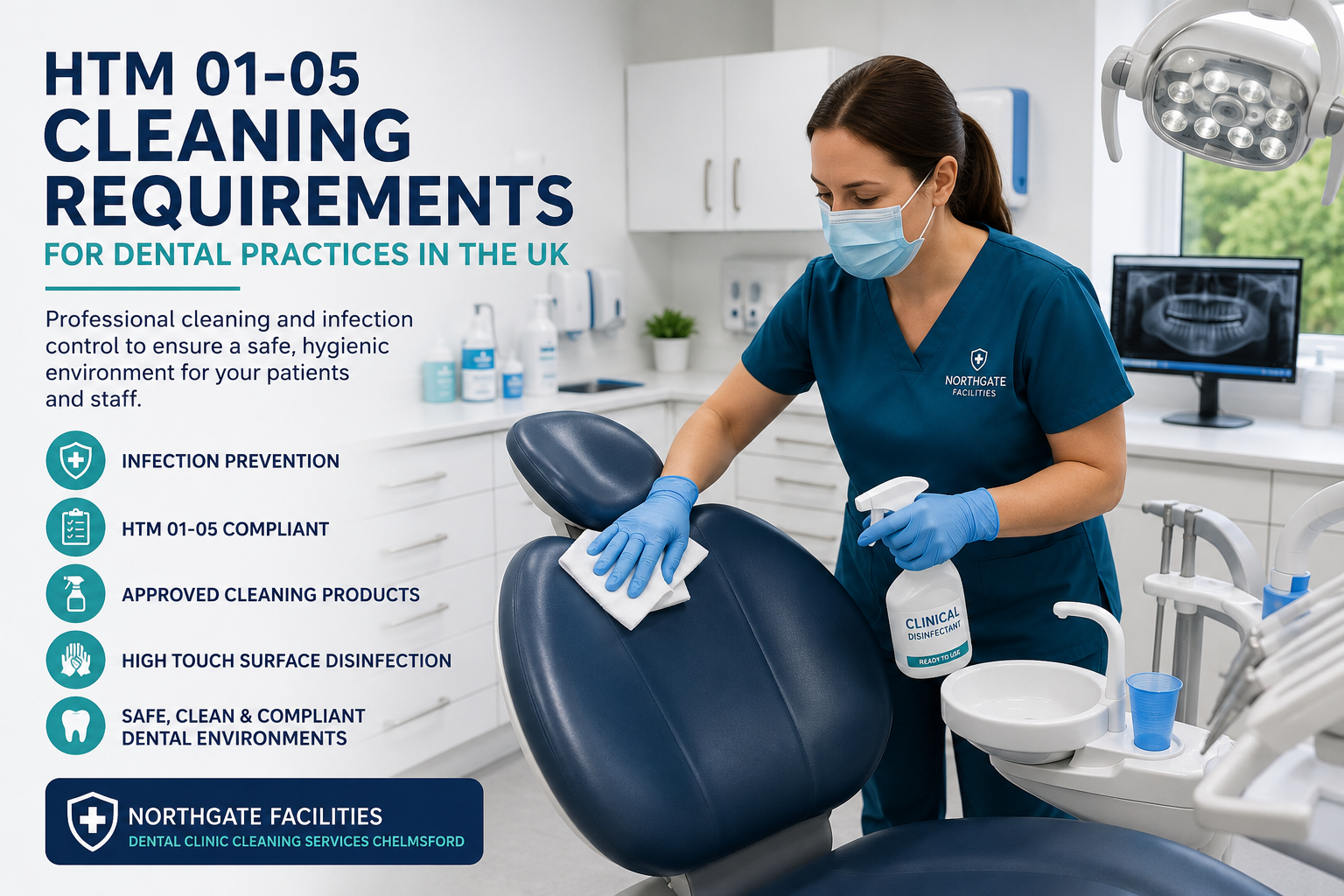
Maintaining exceptional hygiene standards is essential for every dental practice in the UK. Patients trust dental professionals to provide treatment in a clean, safe, and infection-free environment. To ensure this, healthcare providers must comply with HTM 01-05 (Health Technical Memorandum 01-05), the UK's official guidance for decontamination and infection prevention in primary dental care.
Whether you're managing a private dental clinic or an NHS practice, understanding and implementing HTM 01-05 cleaning requirements helps protect patients, staff, and your professional reputation. Compliance also plays a significant role during Care Quality Commission (CQC) inspections and supports effective infection control protocols.
At Northgate Facilities, we provide professional Dental Clinic Cleaning Services Chelmsford that help dental practices meet the highest standards of cleanliness, hygiene, and regulatory compliance. Our trained cleaning specialists understand the unique requirements of healthcare environments and deliver reliable cleaning solutions tailored to dental facilities.
What is HTM 01-05?
HTM 01-05 (Health Technical Memorandum 01-05) is official guidance issued by NHS England that outlines best practices for decontamination and infection prevention in primary care dental practices. It provides detailed recommendations for cleaning, sterilisation, instrument decontamination, waste management, and environmental hygiene.
The primary objectives of HTM 01-05 include:
-
Preventing cross-infection between patients and staff.
-
Maintaining safe treatment environments.
-
Ensuring proper decontamination of dental instruments.
-
Supporting compliance with healthcare regulations.
-
Reducing the spread of bacteria, viruses, and other harmful microorganisms.
Every dental practice should implement cleaning procedures that align with HTM 01-05 to maintain patient safety and meet regulatory expectations.
Why HTM 01-05 Cleaning Standards Matter
Dental surgeries are high-risk healthcare environments. Every day, staff work with saliva, blood, aerosols, and contaminated instruments. Without strict cleaning procedures, harmful pathogens can spread quickly between patients and healthcare workers.
Following HTM 01-05 helps practices:
-
Reduce healthcare-associated infections.
-
Improve patient confidence.
-
Maintain professional standards.
-
Pass CQC inspections.
-
Protect staff health.
-
Extend the lifespan of expensive dental equipment.
-
Demonstrate commitment to quality healthcare.
Professional cleaning is no longer just about appearance—it's a critical component of infection prevention.
Understanding Risk Zones Within a Dental Practice
HTM 01-05 recognises that different areas within a dental practice require different cleaning frequencies and methods.
Clinical Treatment Rooms
These areas carry the highest infection risk and require cleaning:
-
Before opening.
-
Between every patient.
-
After each clinical session.
-
At the end of the working day.
High-touch surfaces include:
-
Dental chairs
-
Operating lights
-
Worktops
-
Instrument trays
-
Suction equipment
-
X-ray controls
-
Computer keyboards
-
Door handles
All surfaces should be cleaned using approved healthcare disinfectants effective against bacteria and viruses.
Decontamination Rooms
Instrument cleaning and sterilisation areas must remain exceptionally clean.
HTM 01-05 recommends maintaining clear separation between:
-
Dirty instrument areas
-
Cleaning zones
-
Inspection areas
-
Sterilisation sections
-
Clean storage areas
This workflow reduces the risk of cross-contamination and ensures instruments remain sterile after processing.
Waiting Areas
Although waiting rooms are considered lower-risk areas, they still require frequent cleaning because many people come into contact with shared surfaces.
Daily cleaning should include:
-
Reception desks
-
Chairs
-
Coffee tables
-
Children's play areas
-
Door handles
-
Light switches
-
Payment terminals
These areas create the first impression for patients and should always appear spotless.
Washrooms
Patient and staff toilets must be cleaned multiple times throughout the day.
Cleaning includes:
-
Toilets
-
Wash basins
-
Soap dispensers
-
Mirrors
-
Floors
-
Door handles
-
Waste bins
Proper hand hygiene facilities should always remain fully stocked.
Daily Cleaning Requirements Under HTM 01-05
One of the most important aspects of HTM 01-05 is maintaining consistent daily cleaning routines.
A structured cleaning schedule should clearly identify:
-
Areas to clean.
-
Cleaning frequency.
-
Responsible staff members.
-
Products used.
-
Time completed.
-
Supervisor verification.
Keeping written cleaning records demonstrates compliance during inspections.
Cleaning Between Every Patient
Between patient appointments, clinical staff should disinfect all surfaces that may have become contaminated.
This includes:
-
Dental chair surfaces
-
Instrument brackets
-
Operating light handles
-
Delivery units
-
Work surfaces
-
Suction tubing
-
Control panels
Disposable barriers should also be replaced after every patient.
This routine significantly reduces the risk of transferring microorganisms from one patient to another.
End-of-Day Deep Cleaning
At the end of every working day, practices should complete a comprehensive clean of all clinical areas.
Tasks include:
-
Vacuuming and mopping floors.
-
Cleaning sinks.
-
Disinfecting worktops.
-
Emptying clinical waste bins.
-
Cleaning cupboard handles.
-
Sanitising equipment surfaces.
-
Disinfecting door handles.
-
Cleaning staff areas.
Floors should always be cleaned from the cleanest area towards the dirtiest area to minimise contamination.
Approved Cleaning Products
HTM 01-05 emphasises using cleaning products specifically designed for healthcare settings.
Suitable products generally include:
-
Neutral detergents
-
Healthcare-grade disinfectants
-
Chlorine-releasing agents (where appropriate)
-
Alcohol wipes for compatible equipment
-
Combined detergent-disinfectant solutions
Manufacturers' instructions should always be followed to ensure effective disinfection without damaging sensitive dental equipment.
Using inappropriate cleaning chemicals can reduce equipment lifespan and compromise infection control.
Colour-Coded Cleaning Equipment
Colour coding helps prevent cross-contamination by ensuring cleaning tools are only used in designated areas.
A typical colour-coding system includes:
-
Red: Toilets and washrooms
-
Blue: General areas
-
Green: Kitchens and food preparation areas
-
Yellow: Clinical and healthcare environments
Separate mops, cloths, buckets, and brushes should be maintained for each area.
Professional providers of Dental Clinic Cleaning Services Chelmsford follow these colour-coded systems to maintain the highest standards of hygiene and compliance.
Cleaning Records and Documentation
Documentation is a vital part of HTM 01-05 compliance.
Dental practices should maintain records of:
-
Daily cleaning schedules
-
Deep cleaning activities
-
Staff training
-
Infection control audits
-
Equipment maintenance
-
Cleaning product safety data
-
Waste disposal records
Accurate documentation provides evidence that cleaning procedures are consistently followed and supports successful CQC inspections.
Instrument Decontamination Requirements
A core element of HTM 01-05 is the safe decontamination of reusable dental instruments. Every instrument that comes into contact with patients must be cleaned, disinfected where appropriate, sterilised, and stored correctly before it is used again. Following these procedures helps minimise the risk of cross-infection and ensures that patients receive treatment with sterile equipment.
The decontamination process generally includes:
-
Collecting used instruments safely after treatment.
-
Cleaning instruments manually or using an ultrasonic cleaner or washer-disinfector.
-
Inspecting instruments for cleanliness and damage.
-
Sterilising instruments using a validated steam steriliser (autoclave).
-
Storing sterilised instruments in clean, dry conditions until required.
Practices should follow a clear workflow that separates contaminated instruments from clean and sterile ones. This one-way process reduces the likelihood of accidental contamination and supports compliance with HTM 01-05 guidance.
Environmental Cleaning Standards
Cleaning the clinical environment is just as important as sterilising instruments. Surfaces throughout the dental practice can become contaminated through splashes, aerosols, or direct contact during treatment. HTM 01-05 recommends regular environmental cleaning to maintain a safe healthcare setting.
Frequently touched surfaces that require routine disinfection include:
-
Dental chairs
-
Worktops
-
Drawer handles
-
Cupboard doors
-
Dental light handles
-
Computer keyboards and mice
-
Telephone handsets
-
Door handles
-
Taps and sink surrounds
Any surface contaminated with blood or other body fluids should be cleaned immediately using an approved disinfectant suitable for healthcare environments.
Personal Protective Equipment (PPE)
Cleaning staff and dental professionals should wear appropriate Personal Protective Equipment (PPE) while carrying out cleaning and decontamination tasks. PPE protects staff from exposure to infectious materials and prevents contamination from spreading.
Appropriate PPE may include:
-
Disposable gloves
-
Disposable plastic aprons
-
Face masks
-
Protective eyewear or face shields
-
Protective footwear where required
PPE should be changed regularly and disposed of according to clinical waste procedures. Staff should also perform proper hand hygiene before putting on PPE and immediately after removing it.
Hand Hygiene Requirements
Good hand hygiene remains one of the most effective ways to prevent the spread of infection in dental practices. HTM 01-05 places significant emphasis on handwashing as part of everyday infection prevention measures.
Staff should wash or sanitise their hands:
-
Before treating each patient.
-
After every patient appointment.
-
Before and after wearing gloves.
-
After handling contaminated instruments.
-
After cleaning clinical areas.
-
Before eating or drinking.
-
After using the washroom.
Handwashing facilities should always be stocked with antibacterial soap, disposable paper towels, and alcohol-based hand sanitiser where appropriate.
Clinical Waste Management
Dental practices generate various types of waste, including clinical waste that requires specialist disposal. Improper handling of waste can create health risks for staff, patients, and the environment.
HTM 01-05 recommends safe segregation of waste into appropriate containers.
Examples include:
-
Clinical waste
-
Sharps waste
-
Pharmaceutical waste
-
Domestic waste
-
Recycling materials
Sharps such as needles and scalpel blades should be disposed of immediately into approved sharps containers. Waste bins should never be overfilled and should be emptied according to the practice's waste management schedule.
Professional cleaning companies understand these requirements and ensure waste handling procedures remain fully compliant with healthcare regulations.
Cleaning Frequencies
Not every area within a dental practice requires the same cleaning schedule. HTM 01-05 recommends cleaning frequencies based on the level of risk presented by each area.
Examples include:
After Every Patient
-
Dental chair
-
Clinical worktops
-
Operating lights
-
Delivery units
-
Instrument trays
Several Times Daily
-
Reception desk
-
Door handles
-
Washrooms
-
Waiting room furniture
-
Payment terminals
Daily
-
Floors
-
Staff rooms
-
Kitchens
-
Storage rooms
-
Corridors
Weekly or Periodically
-
High-level dusting
-
Ventilation grilles
-
Internal windows
-
Wall surfaces
-
Deep cleaning of low-use storage areas
Maintaining a written cleaning schedule helps ensure every task is completed consistently.
Staff Training and Competency
Cleaning procedures are only effective when staff receive appropriate training. Every member of the dental team should understand their responsibilities regarding infection prevention and environmental hygiene.
Training should cover:
-
HTM 01-05 requirements
-
Infection prevention procedures
-
Safe use of cleaning chemicals
-
Colour-coded cleaning equipment
-
Waste segregation
-
PPE usage
-
Hand hygiene
-
Emergency spill response
Regular refresher training helps staff stay updated with current best practices and reinforces consistent cleaning standards.
Audits and Quality Assurance
Routine cleaning audits are an important part of maintaining HTM 01-05 compliance. Regular inspections help identify areas for improvement before they become significant issues.
A typical cleaning audit may assess:
-
Surface cleanliness
-
Equipment condition
-
Cleaning documentation
-
PPE availability
-
Hand hygiene facilities
-
Waste disposal procedures
-
Staff compliance
-
Storage of cleaning products
Keeping detailed audit records demonstrates a proactive approach to infection prevention and supports successful regulatory inspections.
The Role of Professional Cleaning Services
Many dental practices choose to partner with specialist healthcare cleaning providers to maintain consistently high standards. Professional cleaners understand the strict requirements of clinical environments and use healthcare-approved products, equipment, and cleaning techniques.
Choosing experienced Dental Clinic Cleaning Services Chelmsford allows dental practices to focus on patient care while ensuring every area of the facility remains clean, hygienic, and compliant with HTM 01-05 guidance.
Professional cleaning services can provide:
-
Daily surgery cleaning
-
Deep cleaning programmes
-
Infection control support
-
Colour-coded cleaning systems
-
Clinical waste area cleaning
-
Washroom sanitisation
-
Reception and waiting area cleaning
-
Flexible cleaning schedules to minimise disruption
At Northgate Facilities, our experienced team delivers tailored cleaning solutions designed specifically for dental practices. We understand the importance of maintaining a safe clinical environment and work closely with practices to support compliance with HTM 01-05 and CQC expectations.
Common HTM 01-05 Compliance Mistakes to Avoid
Even well-managed dental practices can make mistakes that affect infection control and regulatory compliance. Identifying and addressing these issues can help maintain a safer environment for patients and staff.
Some of the most common mistakes include:
-
Incomplete cleaning records or missing documentation.
-
Failing to disinfect high-touch surfaces between patients.
-
Using incorrect cleaning products for clinical areas.
-
Reusing disposable cleaning materials.
-
Not following colour-coded cleaning systems.
-
Poor segregation of clinical and domestic waste.
-
Inadequate staff training on infection prevention procedures.
-
Irregular maintenance of sterilisation equipment.
-
Improper storage of sterile instruments.
-
Delaying the cleaning of blood or body fluid spills.
Regular audits, staff training, and professional cleaning support can help eliminate these issues and ensure continuous compliance with HTM 01-05 standards.
Preparing for a CQC Inspection
The Care Quality Commission (CQC) expects dental practices to demonstrate effective infection prevention and control measures. A clean and well-maintained environment reflects a commitment to patient safety and quality care.
Before an inspection, practices should ensure that:
-
All clinical and non-clinical areas are clean and organised.
-
Cleaning schedules are fully completed and up to date.
-
Staff understand infection control procedures.
-
Sterilisation equipment has been serviced and validated.
-
PPE supplies are readily available.
-
Waste disposal procedures are being followed correctly.
-
Cleaning products are stored safely and labelled appropriately.
-
Hand hygiene stations are fully stocked.
Being prepared not only supports compliance but also gives patients confidence in the quality of care provided.
Benefits of Professional Dental Cleaning Services
Maintaining a dental practice requires much more than routine housekeeping. Professional healthcare cleaning companies have the expertise, equipment, and knowledge to meet the demanding standards of clinical environments.
Key benefits include:
Improved Infection Control
Professional cleaners use healthcare-approved disinfectants and proven cleaning techniques to minimise the spread of harmful bacteria and viruses.
Regulatory Compliance
Experienced cleaning providers understand HTM 01-05 and CQC requirements, helping practices maintain compliance and reduce the risk of inspection issues.
Enhanced Patient Confidence
A spotless reception area, treatment room, and waiting area reassure patients that they are receiving care in a hygienic and professionally managed environment.
Increased Staff Productivity
Dental professionals can focus on delivering high-quality patient care while experienced cleaning specialists manage environmental hygiene.
Consistent Cleaning Standards
Professional cleaning teams follow structured schedules, detailed checklists, and quality control procedures to ensure every area receives the attention it requires.
Long-Term Cost Savings
Regular cleaning and maintenance help protect expensive dental equipment, flooring, and furniture from unnecessary wear, reducing repair and replacement costs over time.
Why Choose Northgate Facilities?
Maintaining compliance with HTM 01-05 requires expertise, attention to detail, and a thorough understanding of healthcare cleaning standards. At Northgate Facilities, we provide reliable cleaning solutions tailored specifically for dental practices across the UK.
Our services are designed to support safe, hygienic, and fully compliant clinical environments. We work closely with dental professionals to create customised cleaning schedules that fit around daily appointments, ensuring minimal disruption to patient care.
Our experienced team offers:
-
Daily and scheduled dental practice cleaning.
-
Deep cleaning services.
-
Clinical area sanitisation.
-
Reception and waiting room cleaning.
-
Washroom hygiene services.
-
Colour-coded cleaning systems.
-
Fully trained healthcare cleaning operatives.
-
Flexible cleaning schedules.
-
High-quality cleaning equipment and healthcare-approved products.
-
Consistent quality inspections and reporting.
If you're searching for dependable Dental Clinic Cleaning Services Chelmsford Northgate Facilities delivers professional cleaning solutions that help maintain exceptional hygiene standards while supporting HTM 01-05 and CQC compliance.,
Frequently Asked Questions
What is HTM 01-05?
HTM 01-05 is UK guidance that outlines best practices for decontamination, infection prevention, and environmental cleaning in primary care dental practices. It helps ensure safe treatment environments and supports compliance with healthcare regulations.
How often should dental surgeries be cleaned?
Clinical treatment rooms should be cleaned before the start of the day, between every patient, after each clinical session, and thoroughly at the end of the working day. High-touch surfaces should always be disinfected between appointments.
Why are cleaning records important?
Cleaning records provide evidence that hygiene procedures are being completed consistently. They support quality assurance, demonstrate compliance during inspections, and help identify any gaps in cleaning routines.
Can a commercial cleaning company clean a dental practice?
Yes, provided the company has experience in healthcare environments and understands HTM 01-05 requirements. Specialist providers use appropriate cleaning products, follow infection control procedures, and maintain the high standards expected within dental settings.
How does professional cleaning benefit patients?
Professional cleaning reduces the risk of cross-infection, creates a more comfortable clinical environment, and gives patients confidence that the practice prioritises hygiene and safety.
Final Thoughts
Maintaining compliance with HTM 01-05 is essential for every dental practice committed to delivering safe, high-quality patient care. From routine surface disinfection and instrument decontamination to waste management and staff training, every aspect of cleaning plays a vital role in preventing infection and supporting regulatory compliance.
Implementing structured cleaning procedures, maintaining accurate documentation, and carrying out regular audits can significantly improve hygiene standards while preparing practices for successful CQC inspections. Investing in professional cleaning support also allows dental teams to concentrate on what they do best—providing exceptional patient care.
At Northgate Facilities, we understand the unique challenges of maintaining clean and compliant healthcare environments. Our specialist Dental Clinic Cleaning Services Chelmsford are tailored to meet the specific needs of dental practices, helping you achieve consistently high standards of cleanliness, infection control, and regulatory compliance. Whether you require daily cleaning, deep cleaning, or a bespoke healthcare cleaning programme, our experienced team is committed to delivering reliable, high-quality services that protect your patients, staff, and reputation.