
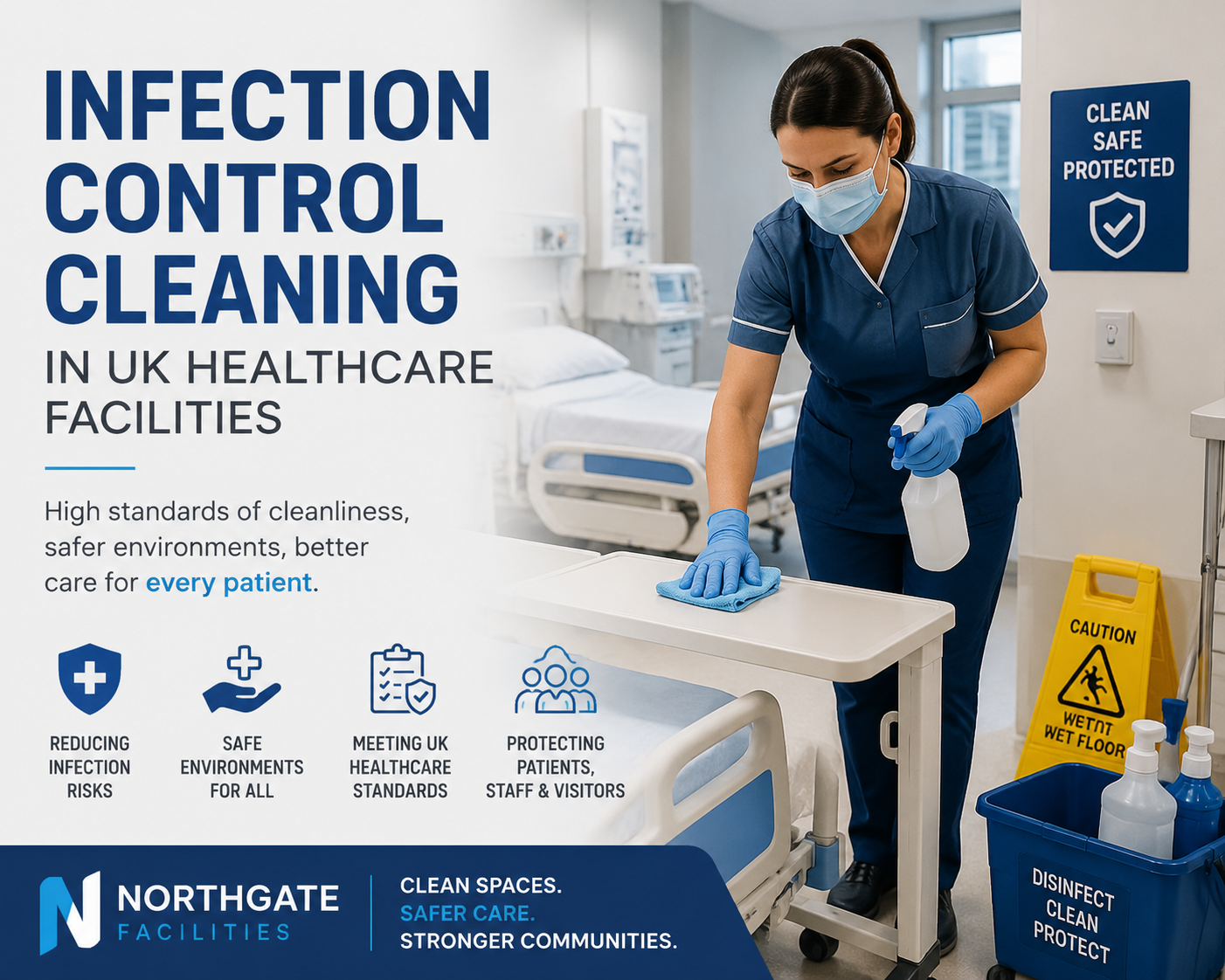
Healthcare environments are expected to provide safe, clean, and hygienic spaces where patients can recover and healthcare professionals can deliver the highest standards of care. In the UK, infection control cleaning plays a vital role in reducing the spread of harmful bacteria, viruses, and other pathogens that can lead to healthcare-associated infections (HCAIs). Every healthcare facility, whether it is a hospital, clinic, dental practice, GP surgery, or care home, relies on effective cleaning protocols to maintain compliance with strict health and safety regulations.
At Northgate Facilities, we understand that healthcare cleaning goes far beyond appearance. Every surface, touchpoint, and clinical area requires specialist attention to help prevent cross-contamination and protect vulnerable patients. Professional cleaning services ensure healthcare facilities remain safe, compliant, and ready to provide exceptional patient care.
Why Infection Control Cleaning Matters
Healthcare-associated infections continue to be a significant challenge worldwide. In healthcare settings, patients often have weakened immune systems, making them more susceptible to infections. Staff members, visitors, and medical equipment can unintentionally contribute to the spread of harmful microorganisms if effective cleaning procedures are not followed.
Infection control cleaning reduces microbial contamination by removing dirt, organic matter, bacteria, fungi, and viruses from frequently touched surfaces. This helps minimise transmission risks while creating a healthier environment for everyone within the facility.
Proper cleaning also supports patient confidence. A visibly clean healthcare environment reassures patients and visitors that hygiene and safety are being taken seriously.
The Importance of Following UK Healthcare Cleaning Standards
Healthcare cleaning in the UK is governed by strict regulations and guidance to ensure consistent hygiene standards across all medical environments. Organisations must follow recognised infection prevention procedures that cover routine cleaning, terminal cleaning, waste management, hand hygiene, and environmental decontamination.
Healthcare facilities are regularly assessed on their cleanliness because poor hygiene can directly affect patient outcomes. Maintaining high cleaning standards not only reduces infection risks but also demonstrates compliance with healthcare regulations and quality assurance frameworks.
Professional cleaning providers stay updated with evolving guidance and implement cleaning schedules designed specifically for healthcare environments.
High-Risk Areas That Require Specialist Cleaning
Not every area within a healthcare facility presents the same level of infection risk. Certain environments require enhanced cleaning due to their increased exposure to pathogens.
Patient rooms require continual cleaning because patients may carry infectious organisms that contaminate surrounding surfaces. Bed frames, bedside lockers, door handles, light switches, chairs, and medical equipment all require frequent disinfection.
Operating theatres demand the highest level of cleanliness. Every surface must be thoroughly disinfected before and after procedures to minimise contamination and protect patients during surgery.
Waiting areas experience constant foot traffic from patients and visitors. Seating, reception desks, counters, payment terminals, and entrance doors become common contact points requiring regular sanitisation throughout the day.
Treatment rooms, laboratories, dental surgeries, isolation wards, and outpatient departments all require specialised infection control cleaning tailored to their unique operational needs.
Frequently Touched Surfaces Need Continuous Attention
One of the biggest challenges in infection control involves frequently touched surfaces. Although these areas may appear clean, they can harbour dangerous microorganisms for extended periods.
Door handles, lift buttons, handrails, keyboards, telephones, touchscreens, reception counters, taps, toilet flushes, medical trolleys, and examination equipment are constantly touched by multiple people throughout the day.
Without regular disinfection, these surfaces become major sources of cross-contamination. Professional healthcare cleaning schedules prioritise these high-touch points using hospital-grade disinfectants and approved cleaning techniques.
Consistent cleaning significantly lowers the chances of bacteria and viruses spreading between patients, staff, and visitors.
Colour-Coded Cleaning Systems Improve Infection Prevention
One widely used practice in UK healthcare cleaning is colour-coded equipment. Different coloured cloths, mops, buckets, and cleaning tools are assigned to specific areas of a healthcare facility.
This system helps prevent cross-contamination by ensuring equipment used in toilets is never used in patient treatment areas or food preparation spaces.
Cleaning professionals receive specialist training to follow colour-coding protocols correctly, reducing the risk of transferring harmful microorganisms from one area to another.
This simple yet highly effective approach supports safer infection control across healthcare environments.
The Role of Professional Cleaning Staff
Healthcare cleaning requires far more than routine janitorial work. Professional cleaners working within medical facilities must understand infection prevention principles, proper chemical handling, safe waste disposal, and healthcare cleaning procedures.
Cleaning staff work alongside healthcare teams to ensure environments remain safe throughout the day. They understand which disinfectants should be used on different surfaces, how long products need to remain in contact with surfaces to be effective, and how to clean sensitive medical environments without disrupting patient care.
Continuous training enables professional cleaners to remain informed about updated infection control guidance and emerging healthcare challenges.
Deep Cleaning as Part of Infection Control
Routine cleaning is essential, but there are times when healthcare environments require more intensive cleaning procedures. This is where Deep Cleaning Services Chelmsford become an important part of maintaining infection control standards.
Deep cleaning involves thoroughly disinfecting areas that may not receive daily attention during routine cleaning schedules. Walls, ceilings, ventilation grilles, behind medical equipment, difficult-to-reach spaces, and high-level surfaces receive comprehensive cleaning to remove hidden contamination.
Following outbreaks, renovations, patient discharge from isolation rooms, or periodic infection prevention programmes, healthcare facilities often rely on Deep Cleaning Services Chelmsford to restore the environment to the highest hygiene standards.
These specialist cleaning services provide additional protection by eliminating contaminants that standard cleaning alone may not completely remove.
The Importance of Correct Cleaning Products
Healthcare cleaning requires the use of approved disinfectants that have been tested against a broad range of bacteria and viruses. Using the wrong cleaning product can leave dangerous microorganisms behind while potentially damaging medical equipment or sensitive surfaces.
Professional cleaning teams understand which products are appropriate for different healthcare environments. Contact time, dilution ratios, compatibility with surfaces, and safe storage are all carefully managed.
Using high-quality disinfectants alongside effective cleaning techniques delivers the best possible infection control outcomes.
Safe Waste Management Supports Infection Prevention
Waste generated within healthcare facilities often contains materials that require careful handling. Clinical waste, sharps, contaminated PPE, and infectious materials must be disposed of according to strict regulations.
Cleaning professionals play an important role in ensuring waste is segregated correctly, removed safely, and transported without creating additional contamination risks.
Proper waste management complements infection control cleaning by reducing opportunities for harmful microorganisms to spread within healthcare settings.
Air Quality and Environmental Hygiene
Although surface cleaning receives much attention, indoor air quality also contributes to infection prevention. Dust particles can carry microorganisms, while poorly maintained ventilation systems may circulate airborne contaminants.
Professional cleaning includes maintaining ventilation areas, removing accumulated dust, and ensuring healthcare environments remain as hygienic as possible.
Combined with proper ventilation systems, regular environmental cleaning supports healthier indoor conditions for patients and staff.
Responding Quickly to Infectious Outbreaks
Healthcare facilities must be prepared to respond rapidly whenever infectious diseases are identified. Isolation areas require immediate specialist cleaning to contain contamination and reduce further transmission.
Professional cleaning providers follow enhanced cleaning protocols during outbreaks, using appropriate PPE, hospital-grade disinfectants, and carefully planned procedures that minimise exposure risks.
Rapid response cleaning helps healthcare facilities continue operating safely while protecting patients, visitors, and healthcare professionals.
Supporting Patient Confidence Through Cleanliness
Patients often judge the quality of healthcare based on the cleanliness of their surroundings. Clean waiting rooms, spotless treatment areas, sanitised washrooms, and fresh-smelling facilities create a positive impression while reinforcing trust.
Families visiting loved ones also gain reassurance when they observe consistently maintained healthcare environments.
Professional infection control cleaning contributes not only to patient safety but also to overall satisfaction and confidence in healthcare services.
Choosing an Experienced Healthcare Cleaning Partner
Healthcare environments require specialist expertise that general commercial cleaning companies may not always provide. An experienced healthcare cleaning provider understands infection prevention, regulatory compliance, staff training, quality assurance, and emergency response procedures.
At Northgate Facilities, our healthcare cleaning solutions are designed to support infection prevention while meeting the highest industry standards. We tailor cleaning programmes to each facility's operational requirements, ensuring every area receives appropriate attention without interrupting patient care.
Whether providing routine daily cleaning or specialist Deep Cleaning Services Chelmsford, our experienced teams deliver reliable, professional, and compliant cleaning solutions that help healthcare providers maintain safe environments for everyone.
Conclusion
Infection control cleaning is one of the most important aspects of healthcare facility management in the UK. Effective cleaning reduces healthcare-associated infections, protects vulnerable patients, supports staff wellbeing, and helps organisations meet strict regulatory requirements.
Healthcare cleaning is not simply about maintaining appearance—it is about creating environments where patients can receive treatment safely and healthcare professionals can perform their duties with confidence. Every surface, room, and touchpoint contributes to infection prevention when cleaned using the correct procedures, equipment, and disinfectants.
By partnering with experienced specialists like Northgate Facilities, healthcare organisations can maintain consistently high hygiene standards while reducing infection risks across their premises. From routine environmental cleaning to specialist Deep Cleaning Services Chelmsford, professional infection control services remain an essential investment in patient safety, operational excellence, and long-term healthcare quality.