
A clean workplace has always been important, but in 2026 it is no longer viewed as a basic maintenance task. Employees, visitors, and clients expect offices to provide a healthy, organised, and hygienic environment that supports wellbeing and productivity. Businesses across the UK are also paying greater attention to workplace safety regulations, employee wellness, and sustainable cleaning practices.
Whether you manage a small office or a large corporate building, maintaining excellent hygiene standards helps reduce illness, improve staff morale, protect valuable office assets, and create a professional first impression. UK health and safety guidance also requires employers to provide clean workplaces, suitable welfare facilities, proper waste management, and safe working conditions.
If your business wants to maintain consistently high standards, partnering with Office Cleaning Services Chelmsford: from Northgate Facilities can make workplace hygiene simple, reliable, and fully compliant.
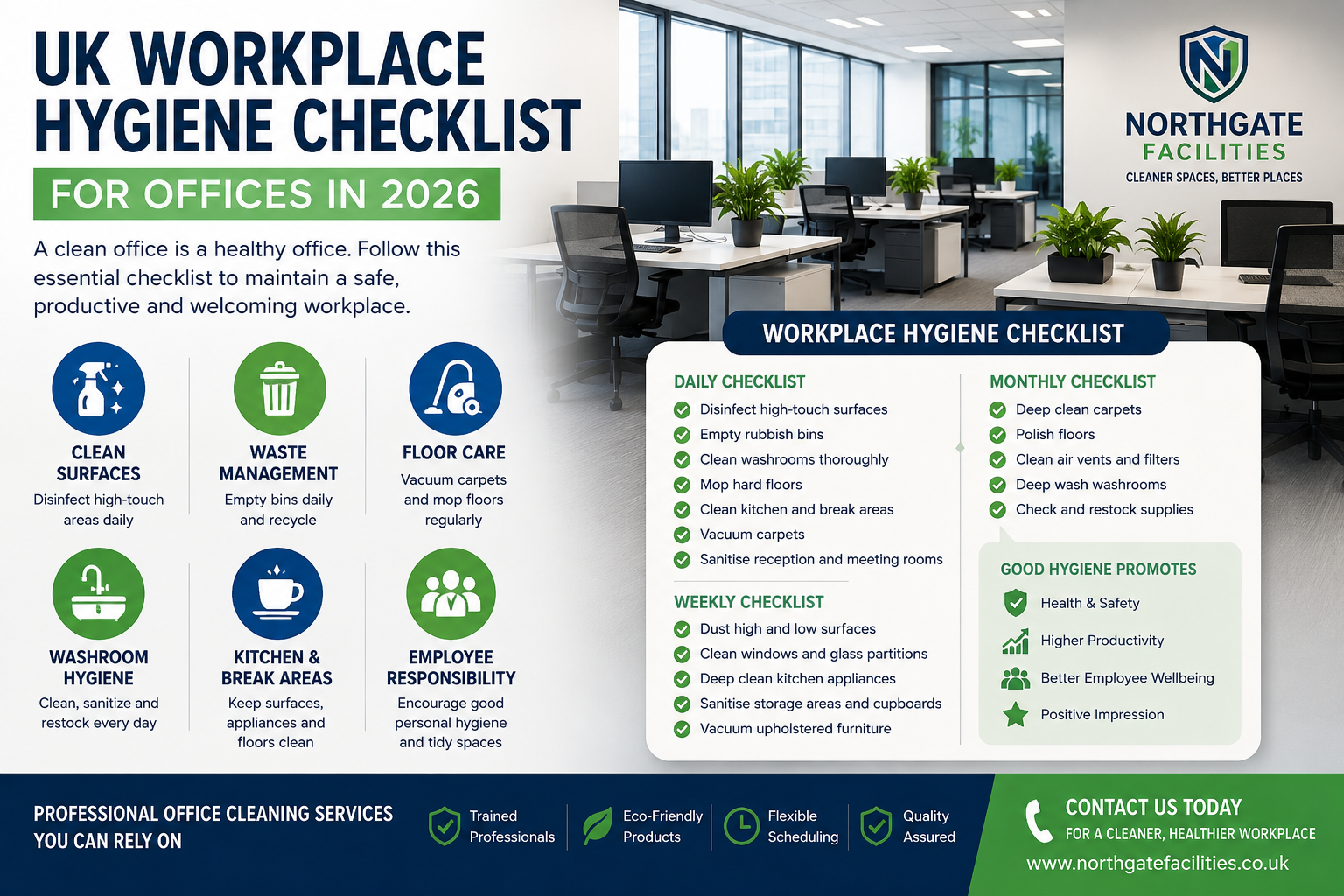
This comprehensive checklist covers everything UK offices should include in their hygiene strategy throughout 2026.
Why Workplace Hygiene Matters More Than Ever
Office hygiene is about much more than keeping desks tidy.
A professionally maintained workplace helps businesses:
-
Reduce the spread of germs and seasonal illnesses
-
Improve employee attendance
-
Boost productivity
-
Enhance company reputation
-
Protect expensive office furniture and equipment
-
Create a positive experience for visitors
-
Meet workplace health and safety expectations
Modern offices also include shared workspaces, hot-desking, meeting rooms, kitchens, and collaborative areas that require regular cleaning because multiple people touch the same surfaces every day.
Daily Workplace Hygiene Checklist
Daily cleaning forms the foundation of every successful office hygiene programme.
1. Clean High-Touch Surfaces
These areas should be disinfected every day because they are touched hundreds of times.
Examples include:
-
Door handles
-
Light switches
-
Lift buttons
-
Reception desks
-
Handrails
-
Shared keyboards
-
Computer mice
-
Telephone handsets
-
Printer controls
-
Meeting room tables
Professional cleaning teams focus heavily on these surfaces because they can quickly spread bacteria and viruses.
2. Empty Waste Bins
Every office should have waste removed daily.
This includes:
-
General rubbish
-
Food waste
-
Recycling bins
-
Confidential waste (following company policy)
Overflowing bins create unpleasant smells and attract bacteria.
3. Vacuum Carpets
Carpets collect:
-
Dust
-
Dirt
-
Allergens
-
Food particles
Daily vacuuming keeps carpets looking professional while improving indoor air quality.
4. Mop Hard Floors
Reception areas, kitchens, corridors, and washrooms require daily mopping using suitable disinfectants.
Clean floors reduce slip risks while maintaining a professional appearance.
5. Sanitise Reception Areas
Reception is the first thing visitors notice.
Daily cleaning should include:
-
Reception desk
-
Visitor seating
-
Glass doors
-
Sign-in tablets
-
Brochure stands
A spotless reception creates immediate confidence in your business.
Washroom Hygiene Checklist
Washrooms require the highest level of attention.
Every day, cleaning staff should:
-
Clean toilets
-
Disinfect sinks
-
Polish mirrors
-
Refill soap dispensers
-
Refill toilet paper
-
Replace hand towels
-
Empty sanitary bins
-
Disinfect door locks
-
Clean taps
-
Mop floors
Kitchen and Break Room Hygiene
Office kitchens quickly become one of the busiest areas.
Daily cleaning should include:
-
Worktops
-
Dining tables
-
Microwaves
-
Refrigerators
-
Coffee machines
-
Kettles
-
Sink areas
-
Cupboard handles
-
Appliance handles
-
Floors
Food waste should never remain overnight.
Desk Cleaning Checklist
Employee workstations require regular attention.
Professional cleaners should:
-
Dust desks
-
Wipe computer monitors
-
Clean keyboards (where permitted)
-
Disinfect telephones
-
Empty desk bins
-
Remove fingerprints from screens
-
Clean office chairs
Many businesses also encourage employees to keep personal workspaces tidy throughout the day.
Meeting Room Hygiene
Meeting rooms host multiple people throughout the working day.
Cleaning should include:
-
Conference tables
-
Chairs
-
Presentation equipment
-
Remote controls
-
Touch screens
-
Whiteboards
-
Door handles
-
Floors
Fresh, clean meeting spaces leave a positive impression on clients.
Weekly Workplace Hygiene Checklist
Certain tasks do not require daily cleaning but should be completed every week.
These include:
-
Dusting high shelves
-
Cleaning skirting boards
-
Polishing glass partitions
-
Deep cleaning kitchen appliances
-
Vacuuming upholstered furniture
-
Cleaning internal windows
-
Sanitising office storage units
-
Wiping walls where required
Weekly cleaning prevents dirt from gradually building up.
Monthly Deep Cleaning Tasks
Monthly deep cleaning extends the life of office facilities.
Tasks include:
-
Carpet shampooing
-
Hard floor machine cleaning
-
Upholstery cleaning
-
Deep kitchen sanitisation
-
Air vent cleaning
-
High-level dust removal
-
Internal glass polishing
-
Detailed washroom descaling
Deep cleaning helps maintain hygiene standards that daily cleaning alone cannot achieve.
Improve Indoor Air Quality
Modern workplace hygiene extends beyond visible cleanliness.
Poor indoor air quality can affect:
-
Employee concentration
-
Allergies
-
Respiratory health
-
Productivity
Businesses should:
-
Clean ventilation grilles
-
Replace HVAC filters
-
Remove dust regularly
-
Vacuum using HEPA filtration where possible
-
Reduce clutter
Good ventilation is also an important workplace requirement under UK guidance.
Stock Essential Hygiene Supplies
Every office should maintain adequate supplies of:
-
Hand soap
-
Hand sanitiser
-
Toilet tissue
-
Paper towels
-
Cleaning sprays
-
Bin liners
-
Disposable gloves
-
Surface disinfectants
Running out of hygiene supplies creates unnecessary health risks.
Encourage Employee Hygiene
Cleaning companies maintain the workplace, but staff also contribute.
Encourage employees to:
-
Wash hands regularly
-
Keep desks tidy
-
Report spills immediately
-
Dispose of food waste properly
-
Clean shared equipment after use
-
Stay home when seriously unwell
Good workplace hygiene is everyone's responsibility.
Prevent Cross-Contamination
Professional cleaners use colour-coded cleaning systems to reduce cross-contamination.
For example:
-
Red cloths for washrooms
-
Blue for general office areas
-
Green for kitchens
-
Yellow for clinical or specialist environments
Using the correct equipment helps prevent bacteria from spreading between different areas.
Maintain Cleaning Records
Many businesses now maintain cleaning logs showing:
-
Date
-
Time
-
Area cleaned
-
Staff member
-
Products used
-
Inspection notes
Cleaning records improve accountability and demonstrate consistent hygiene management.
Sustainable Office Cleaning in 2026
Environmental responsibility has become increasingly important.
Professional cleaning providers now prioritise:
-
Eco-friendly cleaning products
-
Microfibre cloth systems
-
Water-saving techniques
-
Recycling programmes
-
Reduced chemical usage
-
Energy-efficient cleaning equipment
These methods support both sustainability goals and employee wellbeing.
Signs Your Office Needs Professional Cleaning
Many offices attempt to manage cleaning internally before recognising the need for specialist support.
Warning signs include:
-
Dust returning quickly
-
Persistent odours
-
Dirty carpets
-
Overflowing bins
-
Fingerprints on glass
-
Dirty washrooms
-
Employee complaints
-
Increased sickness absence
Professional cleaning helps eliminate these problems before they affect your business.
Why Choose Office Cleaning Services Chelmsford?
Businesses looking for dependable Office Cleaning Services Chelmsford: need more than basic janitorial support.
Northgate Facilities delivers professional commercial cleaning tailored to modern workplaces, helping businesses maintain exceptional hygiene standards every day.
Their experienced cleaning teams provide:
-
Daily office cleaning
-
Washroom sanitisation
-
Carpet cleaning
-
Kitchen hygiene
-
High-touch surface disinfection
-
Deep cleaning services
-
Flexible cleaning schedules
-
Fully trained cleaning professionals
Whether your office operates during standard business hours or around the clock, professional cleaning ensures your premises always reflect the highest standards.
Final Thoughts
A structured workplace hygiene checklist is one of the most valuable tools for maintaining a healthy, productive office in 2026. Daily cleaning, weekly maintenance, and scheduled deep cleaning all work together to create a safe environment for employees and visitors while supporting compliance with UK workplace expectations.
For businesses that want reliable, consistent, and professional cleaning, Northgate Facilities offers trusted Office Cleaning Services Chelmsford: designed to keep offices spotless, hygienic, and welcoming throughout the year.
Investing in professional workplace cleaning is not simply about appearance—it is an investment in employee wellbeing, business reputation, and long-term operational success.
A clean workplace has always been important, but in 2026 it is no longer viewed as a basic maintenance task. Employees, visitors, and clients expect offices to provide a healthy, organised, and hygienic environment that supports wellbeing and productivity. Businesses across the UK are also paying greater attention to workplace safety regulations, employee wellness, and sustainable cleaning practices.
Whether you manage a small office or a large corporate building, maintaining excellent hygiene standards helps reduce illness, improve staff morale, protect valuable office assets, and create a professional first impression. UK health and safety guidance also requires employers to provide clean workplaces, suitable welfare facilities, proper waste management, and safe working conditions.
If your business wants to maintain consistently high standards, partnering with Office Cleaning Services Chelmsford: from Northgate Facilities can make workplace hygiene simple, reliable, and fully compliant.
This comprehensive checklist covers everything UK offices should include in their hygiene strategy throughout 2026.
Why Workplace Hygiene Matters More Than Ever
Office hygiene is about much more than keeping desks tidy.
A professionally maintained workplace helps businesses:
-
Reduce the spread of germs and seasonal illnesses
-
Improve employee attendance
-
Boost productivity
-
Enhance company reputation
-
Protect expensive office furniture and equipment
-
Create a positive experience for visitors
-
Meet workplace health and safety expectations
Modern offices also include shared workspaces, hot-desking, meeting rooms, kitchens, and collaborative areas that require regular cleaning because multiple people touch the same surfaces every day.
Daily Workplace Hygiene Checklist
Daily cleaning forms the foundation of every successful office hygiene programme.
1. Clean High-Touch Surfaces
These areas should be disinfected every day because they are touched hundreds of times.
Examples include:
-
Door handles
-
Light switches
-
Lift buttons
-
Reception desks
-
Handrails
-
Shared keyboards
-
Computer mice
-
Telephone handsets
-
Printer controls
-
Meeting room tables
Professional cleaning teams focus heavily on these surfaces because they can quickly spread bacteria and viruses.
2. Empty Waste Bins
Every office should have waste removed daily.
This includes:
-
General rubbish
-
Food waste
-
Recycling bins
-
Confidential waste (following company policy)
Overflowing bins create unpleasant smells and attract bacteria.
3. Vacuum Carpets
Carpets collect:
-
Dust
-
Dirt
-
Allergens
-
Food particles
Daily vacuuming keeps carpets looking professional while improving indoor air quality.
4. Mop Hard Floors
Reception areas, kitchens, corridors, and washrooms require daily mopping using suitable disinfectants.
Clean floors reduce slip risks while maintaining a professional appearance.
5. Sanitise Reception Areas
Reception is the first thing visitors notice.
Daily cleaning should include:
-
Reception desk
-
Visitor seating
-
Glass doors
-
Sign-in tablets
-
Brochure stands
A spotless reception creates immediate confidence in your business.
Washroom Hygiene Checklist
Washrooms require the highest level of attention.
Every day, cleaning staff should:
-
Clean toilets
-
Disinfect sinks
-
Polish mirrors
-
Refill soap dispensers
-
Refill toilet paper
-
Replace hand towels
-
Empty sanitary bins
-
Disinfect door locks
-
Clean taps
-
Mop floors
Kitchen and Break Room Hygiene
Office kitchens quickly become one of the busiest areas.
Daily cleaning should include:
-
Worktops
-
Dining tables
-
Microwaves
-
Refrigerators
-
Coffee machines
-
Kettles
-
Sink areas
-
Cupboard handles
-
Appliance handles
-
Floors
Food waste should never remain overnight.
Desk Cleaning Checklist
Employee workstations require regular attention.
Professional cleaners should:
-
Dust desks
-
Wipe computer monitors
-
Clean keyboards (where permitted)
-
Disinfect telephones
-
Empty desk bins
-
Remove fingerprints from screens
-
Clean office chairs
Many businesses also encourage employees to keep personal workspaces tidy throughout the day.
Meeting Room Hygiene
Meeting rooms host multiple people throughout the working day.
Cleaning should include:
-
Conference tables
-
Chairs
-
Presentation equipment
-
Remote controls
-
Touch screens
-
Whiteboards
-
Door handles
-
Floors
Fresh, clean meeting spaces leave a positive impression on clients.
Weekly Workplace Hygiene Checklist
Certain tasks do not require daily cleaning but should be completed every week.
These include:
-
Dusting high shelves
-
Cleaning skirting boards
-
Polishing glass partitions
-
Deep cleaning kitchen appliances
-
Vacuuming upholstered furniture
-
Cleaning internal windows
-
Sanitising office storage units
-
Wiping walls where required
Weekly cleaning prevents dirt from gradually building up.
Monthly Deep Cleaning Tasks
Monthly deep cleaning extends the life of office facilities.
Tasks include:
-
Carpet shampooing
-
Hard floor machine cleaning
-
Upholstery cleaning
-
Deep kitchen sanitisation
-
Air vent cleaning
-
High-level dust removal
-
Internal glass polishing
-
Detailed washroom descaling
Deep cleaning helps maintain hygiene standards that daily cleaning alone cannot achieve.
Improve Indoor Air Quality
Modern workplace hygiene extends beyond visible cleanliness.
Poor indoor air quality can affect:
-
Employee concentration
-
Allergies
-
Respiratory health
-
Productivity
Businesses should:
-
Clean ventilation grilles
-
Replace HVAC filters
-
Remove dust regularly
-
Vacuum using HEPA filtration where possible
-
Reduce clutter
Good ventilation is also an important workplace requirement under UK guidance.
Stock Essential Hygiene Supplies
Every office should maintain adequate supplies of:
-
Hand soap
-
Hand sanitiser
-
Toilet tissue
-
Paper towels
-
Cleaning sprays
-
Bin liners
-
Disposable gloves
-
Surface disinfectants
Running out of hygiene supplies creates unnecessary health risks.
Encourage Employee Hygiene
Cleaning companies maintain the workplace, but staff also contribute.
Encourage employees to:
-
Wash hands regularly
-
Keep desks tidy
-
Report spills immediately
-
Dispose of food waste properly
-
Clean shared equipment after use
-
Stay home when seriously unwell
Good workplace hygiene is everyone's responsibility.
Prevent Cross-Contamination
Professional cleaners use colour-coded cleaning systems to reduce cross-contamination.
For example:
-
Red cloths for washrooms
-
Blue for general office areas
-
Green for kitchens
-
Yellow for clinical or specialist environments
Using the correct equipment helps prevent bacteria from spreading between different areas.
Maintain Cleaning Records
Many businesses now maintain cleaning logs showing:
-
Date
-
Time
-
Area cleaned
-
Staff member
-
Products used
-
Inspection notes
Cleaning records improve accountability and demonstrate consistent hygiene management.
Sustainable Office Cleaning in 2026
Environmental responsibility has become increasingly important.
Professional cleaning providers now prioritise:
-
Eco-friendly cleaning products
-
Microfibre cloth systems
-
Water-saving techniques
-
Recycling programmes
-
Reduced chemical usage
-
Energy-efficient cleaning equipment
These methods support both sustainability goals and employee wellbeing.
Signs Your Office Needs Professional Cleaning
Many offices attempt to manage cleaning internally before recognising the need for specialist support.
Warning signs include:
-
Dust returning quickly
-
Persistent odours
-
Dirty carpets
-
Overflowing bins
-
Fingerprints on glass
-
Dirty washrooms
-
Employee complaints
-
Increased sickness absence
Professional cleaning helps eliminate these problems before they affect your business.
Why Choose Office Cleaning Services Chelmsford?
Businesses looking for dependable Office Cleaning Services Chelmsford: need more than basic janitorial support.
Northgate Facilities delivers professional commercial cleaning tailored to modern workplaces, helping businesses maintain exceptional hygiene standards every day.
Their experienced cleaning teams provide:
-
Daily office cleaning
-
Washroom sanitisation
-
Carpet cleaning
-
Kitchen hygiene
-
High-touch surface disinfection
-
Deep cleaning services
-
Flexible cleaning schedules
-
Fully trained cleaning professionals
Whether your office operates during standard business hours or around the clock, professional cleaning ensures your premises always reflect the highest standards.
Final Thoughts
A structured workplace hygiene checklist is one of the most valuable tools for maintaining a healthy, productive office in 2026. Daily cleaning, weekly maintenance, and scheduled deep cleaning all work together to create a safe environment for employees and visitors while supporting compliance with UK workplace expectations.
For businesses that want reliable, consistent, and professional cleaning, Northgate Facilities offers trusted Office Cleaning Services Chelmsford: designed to keep offices spotless, hygienic, and welcoming throughout the year.
Investing in professional workplace cleaning is not simply about appearance—it is an investment in employee wellbeing, business reputation, and long-term operational success.