
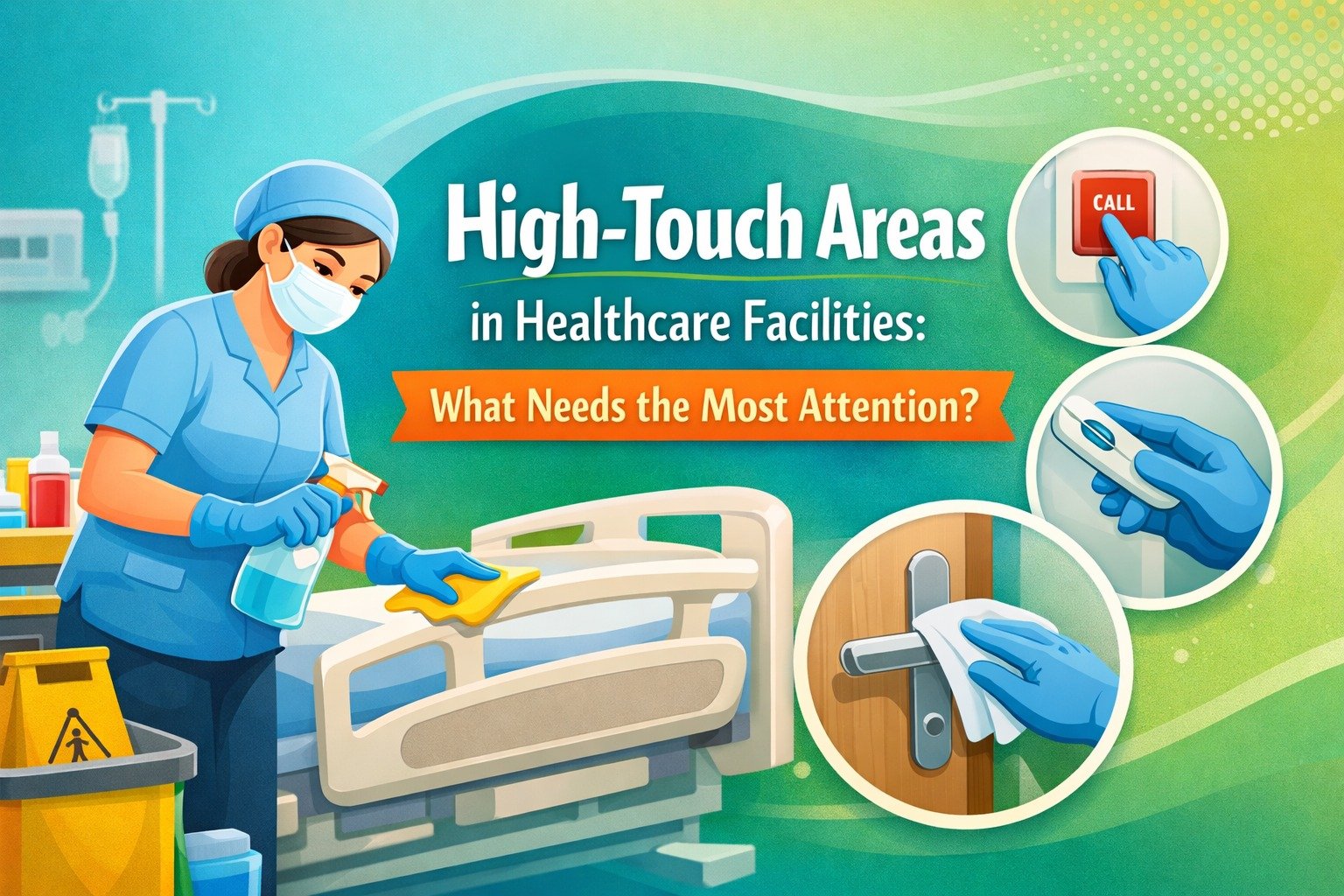
High-touch areas in healthcare facilities are surfaces that are frequently contacted by patients, staff, and visitors. These areas are critical in controlling the spread of infections because pathogens like bacteria and viruses can survive on surfaces for extended periods. If not cleaned properly, they can contribute to hospital-acquired infections (HAIs), posing serious risks to patient health. Understanding which areas are most touched and implementing targeted cleaning protocols is essential for patient safety. Healthcare cleaning requires a combination of trained staff, effective disinfectants, and a structured cleaning schedule. Prioritizing high-touch surfaces ensures a safer, hygienic environment for everyone in the facility.
Understanding High-Touch Areas
What Defines a High-Touch Area?
High-touch areas are defined as surfaces that are repeatedly touched throughout the day by multiple people. This includes items like doorknobs, light switches, bed rails, and shared medical equipment. The frequency of contact makes these surfaces more prone to contamination compared to less frequently touched areas. High-touch areas are hotspots for pathogens, which can easily spread between patients, visitors, and staff. Identifying these areas is the first step in developing an effective cleaning and disinfection plan. In healthcare settings, overlooking these surfaces can lead to increased infection rates and compromised patient safety.
Why They Matter in Infection Control
High-touch areas play a significant role in the transmission of infectious agents within healthcare facilities. Pathogens left on these surfaces can survive for hours or even days, increasing the risk of cross-contamination. Effective cleaning of these surfaces helps reduce the transmission of harmful microorganisms. Prioritizing high-touch areas supports overall infection prevention strategies. It also ensures compliance with healthcare hygiene standards and regulatory guidelines. Maintaining clean high-touch areas protects both patients and staff, reinforcing trust in the facility’s safety measures.
Common High-Touch Areas in Healthcare Facilities
Patient Rooms
Patient rooms contain several high-touch points including bed rails, call buttons, IV poles, and bedside tables. These surfaces are in constant contact with patients and caregivers, making them highly susceptible to contamination. Regular cleaning and disinfection reduce the risk of HAIs and ensure patient safety. Even minor lapses in cleaning protocols can lead to the spread of bacteria and viruses. Cleaning staff should follow strict protocols and use hospital-grade disinfectants on these surfaces. Patient rooms require daily, and sometimes multiple-times-per-day, cleaning for optimal hygiene.
Nurse Stations
Nurse stations are busy hubs where staff interact with computers, phones, countertops, and medical charts. High-touch surfaces here are frequently handled by multiple staff members, increasing the potential for pathogen spread. Maintaining cleanliness at nurse stations is crucial to prevent cross-contamination from staff to patients. Disinfection protocols should be performed at regular intervals throughout the day. Special attention should be given to keyboards, telephones, and shared equipment. Proper training and consistent monitoring ensure nurse stations remain hygienic and safe.
Waiting Areas
Waiting areas often include chairs, armrests, reception counters, and shared magazines, which are frequently touched by visitors and patients. These areas are high-risk zones for transmitting germs because of the high volume of people. Regular disinfection reduces contamination and promotes a healthy environment for patients and visitors. Facilities should implement a schedule for frequent cleaning of waiting rooms, especially during peak hours. Materials like vinyl or plastic chairs are easier to clean and disinfect effectively. Hygiene awareness signage in waiting areas also encourages safe behavior among visitors.
Bathrooms & Restrooms
Bathrooms are some of the most critical high-touch areas, including faucets, door handles, flush levers, and soap dispensers. They are hotspots for bacteria and require meticulous cleaning and frequent disinfection. Proper cleaning reduces the spread of pathogens like E. coli and other bacteria that thrive in moist environments. Staff should use disinfectants designed for restroom hygiene and follow strict cleaning checklists. Regular monitoring ensures no areas are missed during cleaning rounds. Maintaining clean bathrooms improves overall patient satisfaction and reduces infection risks.
Medical Equipment
Medical equipment such as thermometers, stethoscopes, wheelchairs, and blood pressure cuffs comes into direct contact with patients. These surfaces can transmit pathogens if not disinfected properly between uses. Equipment must be cleaned with appropriate disinfectants and handled according to infection control protocols. Staff should be trained to clean equipment immediately after each patient use. Proper maintenance and cleaning reduce the likelihood of HAIs. Ensuring medical devices are sanitized also promotes patient trust and safety.
Cleaning & Disinfection Strategies
Frequency & Protocols
High-touch surfaces require cleaning on a strict schedule depending on the area’s usage. Daily cleaning may be sufficient in some areas, but high-traffic points may need multiple rounds of disinfection per day. Using EPA-approved disinfectants ensures effective removal of harmful microorganisms. Staff must follow structured cleaning protocols to prevent cross-contamination. Documenting cleaning schedules and maintaining logs is crucial for compliance. Adherence to these protocols significantly reduces the risk of infection within healthcare facilities.
Proper Techniques
Cleaning high-touch areas is not just about using disinfectants but also following proper techniques. Surfaces should be wiped in a single direction rather than in circles to avoid spreading germs. Cleaning tools should be changed frequently to prevent cross-contamination. Staff must be trained in both the products used and the correct application methods. Proper personal protective equipment (PPE) should be worn during cleaning. Consistent technique ensures every surface receives thorough attention and remains safe for patient use.
Monitoring & Auditing
Regular monitoring and auditing of cleaning practices ensures high-touch areas remain hygienic. Checklists and surface swab testing can identify areas missed during cleaning rounds. Audits encourage accountability and maintain high standards of cleanliness. Continuous assessment allows facilities to improve protocols and address weaknesses. Staff feedback is essential in refining cleaning procedures. Monitoring ensures a proactive approach to infection control rather than reactive measures.
Innovations in High-Touch Area Hygiene
Healthcare facilities are increasingly adopting technology to reduce contamination risks. Antimicrobial surface coatings prevent bacteria from adhering to surfaces. UV-C light disinfection systems can kill viruses and bacteria quickly, even in hard-to-reach areas. Touchless technology such as automatic doors and sensor faucets limits direct contact. These innovations supplement traditional cleaning methods and improve overall hygiene. Implementing technology-driven solutions enhances safety for patients, staff, and visitors. Continuous investment in hygiene innovation keeps healthcare facilities ahead in infection prevention.
Antimicrobial Surface Coatings
Antimicrobial coatings are special surface treatments that inhibit the growth of bacteria, viruses, and fungi on frequently touched surfaces. These coatings create a protective barrier, making it harder for pathogens to survive or multiply. Common applications include door handles, bed rails, countertops, and medical equipment. They are particularly useful in high-traffic areas where constant cleaning may be challenging. By reducing microbial load, these coatings complement routine cleaning protocols. Facilities using antimicrobial surfaces experience lower contamination rates and improved patient safety.
UV-C Light Disinfection Systems
UV-C light disinfection uses ultraviolet light to eliminate harmful microorganisms on surfaces and in the air. This technology is highly effective against bacteria, viruses, and fungi, including hard-to-kill pathogens. Portable UV-C devices can disinfect patient rooms, equipment, and common areas quickly and efficiently. UV-C systems work best when used in conjunction with standard cleaning methods, ensuring a deeper level of hygiene. Many hospitals have integrated UV-C cycles into their daily cleaning routines to prevent cross-contamination. This innovation reduces reliance solely on chemical disinfectants while maintaining high sanitation standards.
Touchless Technology
Touchless systems reduce physical contact with surfaces, thereby minimizing the transfer of germs. Examples include automatic doors, sensor-activated faucets, soap dispensers, and hand sanitizer stations. By limiting direct hand contact, these innovations reduce the risk of contamination on high-touch areas. Touchless technology is particularly effective in restrooms, waiting areas, and entrances, which are used frequently by patients, visitors, and staff. Incorporating touchless solutions into facility design demonstrates a proactive approach to infection control. It also encourages hygiene-conscious behavior among everyone in the healthcare environment.
Smart Cleaning Solutions
Smart cleaning solutions include automated systems that monitor cleaning schedules and detect areas needing attention. Some advanced systems use sensors to track how often surfaces are touched and alert staff when disinfection is required. Others employ data analytics to optimize cleaning workflows, ensuring no area is neglected. Smart cleaning technologies improve efficiency, consistency, and accountability in maintaining hygiene standards. Facilities can track results and continuously improve infection control practices. These tools bridge the gap between manual cleaning and advanced hygiene management.
Benefits of Technology-Driven Hygiene Innovations
Adopting these innovations provides several benefits:
- Reduces the survival and spread of pathogens.
- Enhances patient, staff, and visitor safety.
- Supports compliance with healthcare regulations and hygiene standards.
- Optimizes cleaning efficiency and reduces human error.
- Provides a visible demonstration of commitment to infection prevention.
By integrating antimicrobial coatings, UV-C disinfection, touchless technology, and smart cleaning solutions, healthcare facilities can significantly improve hygiene in high-touch areas. These innovations complement standard cleaning practices and help maintain a safer, healthier environment.
The Role of Staff & Visitors
Infection control is a team effort involving both staff and visitors. Proper hand hygiene is essential to minimize the transfer of pathogens. Staff should follow strict cleaning protocols, while visitors should be educated on safe behaviors. Awareness campaigns, signage, and reminders can reduce contamination risks in high-touch areas. Prompt reporting of unclean surfaces allows immediate corrective actions. Collaboration ensures a culture of safety and hygiene throughout the facility.
Why Choose Northgate Cleaning Services
Northgate Cleaning Services specializes in healthcare cleaning with a strong focus on patient safety and regulatory compliance. Their team is trained in advanced infection control protocols and uses hospital-approved disinfectants. Structured checklists ensure every high-touch surface is thoroughly cleaned. They provide regular audits and staff training to maintain consistent standards. Choosing Northgate ensures a hygienic, safe environment that minimizes infection risks. Their experience and attention to detail make them a trusted partner for healthcare facilities.
Conclusion
High-touch areas in healthcare facilities are critical points where infections can easily spread if not properly managed. Identifying these surfaces and implementing strict cleaning and disinfection protocols significantly reduces the risk of hospital-acquired infections. Combining effective cleaning techniques, regular monitoring, staff training, and innovative hygiene technologies ensures a safer environment for patients, staff, and visitors. By prioritizing high-touch areas, healthcare facilities can maintain high standards of cleanliness, protect patient health, and comply with regulatory requirements. Choosing professional services like Northgate Cleaning Services ensures expertise, reliability, and consistent hygiene practices that safeguard everyone within the facility.
FAQs
What are high-touch areas in healthcare facilities?
High-touch areas are surfaces frequently contacted by patients, staff, and visitors, like bed rails, doorknobs, and keyboards.
Why are these areas important for cleaning?
They are major sources of infection because pathogens can survive on them for hours or days, increasing the risk of HAIs.
How often should high-touch areas be cleaned?
Cleaning frequency depends on traffic; some areas need daily cleaning, while high-traffic zones may require multiple rounds daily.
What cleaning methods are most effective?
Using EPA-approved disinfectants, proper wiping techniques, and monitoring via checklists ensures effective cleaning.
Can technology help reduce contamination?
Yes, antimicrobial coatings, UV-C lights, and touchless systems can significantly reduce surface contamination.